Sam Penny (00:00)
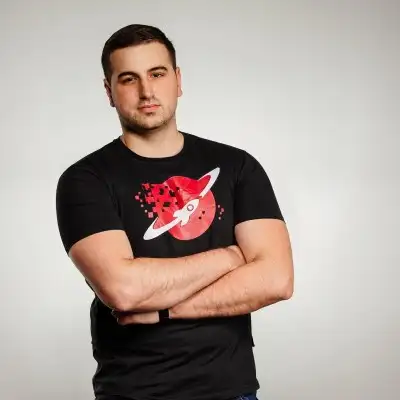
Welcome back to Built to Sell, Built to Buy. I'm your host Sam Penny. If you're a business owner who's serious about scaling with purpose, maximizing valuation, or gearing up for an exit, this is your corner of the someone who's built a performance engine from the ground the founder of Digital Rocket Ads, a full stack growth agency that's helped scale over $250 million in client revenue. He started out solo in Serbia.
turn marketing frustration into a no bullshit operating system and now runs a team obsessed with profitable growth. There's no bullshit with this one. There's no fake gurus, just systems, numbers and real execution. And if 2026 is your year to stop playing small and start compounding, lean in. This episode is about fixing the funnel, scaling without chaos and building a business buyers want or never want to leave.
So let's get into it. Ivan, welcome to the show.
Ivan Janku (00:55)
Thank you for having me, Sam.
Sam Penny (00:56)
I'm looking forward to this because I love you no bullshit approach to this digital rocket ads. I've been all over your website, I've done a deep dive into a lot of the background ⁓ of who you are and digital rocket ads. But let's start with some of the background because I always find that really interesting. Take us back to the beginning, what really pulled you into entrepreneurship in the first place?
Ivan Janku (01:18)
Well, since I grew up in Serbia, I'm still there, like you can imagine that the job opportunities were not that amazing. So started freelancing and I just realized that ads were a thing that I could do because I really had a crappy computer. So that's kind of the only thing, one of the only things I could do back then. So I started learning a lot of stuff. started developing and I started freelancing when I was like 20, 21. But honestly, it was incredibly successful.
It took me a couple of years, but they got to a point where I just had too much work and I started just training people that they knew. And then all of a sudden, like there was more and more agencies that wanted to work with us in white label. And because we're from Eastern Europe, our price range is much more comfortable for a lot of clients. So you can imagine one thing pulled another and all of a sudden like 40 people later, 10 years later.
Sam Penny (02:04)
That's amazing. So you talk about the leaky bucket problem quite often throughout digital rocket ads. What were the first leaks you really spotted in your own work?
Ivan Janku (02:17)
So the first thing, like you can imagine 2014, 15, 16, it was completely different. Like we worked through the Excel power sheets and stuff like that. Power editor was a thing. so most agencies didn't even have a creative team, including us back then. So it was just media buying. then the biggest problem was the clients just like whatever they gave you, you had to use that as creative. So you only kind of had media buying and copy in your control. And then if the client messed up the creatives, you're done. Like you don't have a solution.
So that was the first thing we started introducing. And basically that was the first step. And then everything else was just as the clients couldn't solve their own problems that affected us, we just added that as a service.
Sam Penny (02:57)
those early days, ⁓ obviously starting out solo in Serbia, all of a sudden you realize that, hey, I've got something pretty important here. Going from $0 to a million dollars revenue, was there a real mindset shift that you really had to go through to get through that period?
Ivan Janku (03:17)
I'm still going through a lot of different mindset shifts, but like, had to go through many. And it was just like, first mindset shift was just like getting people to hire them and actually get people to do some work just for that was going from a solo guy to actually having a team that can function was like a couple of my shifts and then getting to a team of like 10 people, 20 people had also a couple of my shifts. And I talked to some people, I don't know whose sense and sentence that is, but they remember
Sam Penny (03:19)
You
Ivan Janku (03:44)
Ralph Burns quoting like every time your company scales by 300%, you need to basically break everything and rebuild from zero. And that's like a couple of mentions at least.
Sam Penny (03:53)
So give us an example of where you had to break everything and start again.
Ivan Janku (03:57)
So we had a lot of issues developing like creative team that can pump out creative and enough volume that was a high quality enough. So we went through a lot of changes and now, especially with AI, the moment we realized how much like variables we can make with AI, it was super important for us to implement that. So that was like one of the newest changes we introduced. Not the newest honestly, but like one of the easiest examples to show.
Sam Penny (04:20)
Now, Ivan, you're pretty famous ⁓ for saying you're allergic to marketing in ways. So in your own practice, in digital rocket ads, how does that show up?
Ivan Janku (04:30)
Well, first thing that we do is always audit everybody. And that's the main thing. It doesn't make sense to me. Like you don't go to a doctor and you just get a medication and like, God bless you, you're going to survive. so that's the first thing that we look at. And so usually we identify a lot of either mismanagement in Aspen or like a lot of friction in between the stages in the funnel, because usually people obsess about the Facebook ads, but Facebook has only bring people to your website. So now we currently see an epidemic of
websites having really bad performance on mobile, and then the CEO is not understanding that most of their Facebook traffic is gonna be mobile, and then that kind of destroys your Facebook ad performance. So even if you have a good agency, and that's one of the points that I noticed, like most business owners, what can they do? They hire a Facebook ad agency and then they hire a web dev agency. But that web dev agency never actually was performance-based. They just did a nice website.
Rarely they actually know CRO and in order for them to know CRO they should be actually having like somebody running ads so they can actually have ⁓ a system to test and see their changes. So without having that under one roof you actually always end up in a problem.
Sam Penny (05:41)
Look, I've had many, I've worked with many agencies in the past. I've run my own companies for about 25 years. And yet, you know, so typical for an entrepreneur or a business to bounce between agencies because you know, exactly what you just said, you'll have a CRO agency, but then you'll have a Facebook ads agency. And really most agencies they're selling platforms. You're really.
from what I can see is selling a system. walk me through the rocket ship system. What does it actually look like?
Ivan Janku (06:14)
So after we finish the audit, the audit gives us a clear game plan on what we need to do first. And we in the audit usually mark by priority what needs to be fixed first. And so now it's depending by business. So usually what happens in most cases, we like to get the website optimized as much as we can because that's the leaky bucket approach. Anytime we forget to say something important like delivery times, if you have a guarantee, people forget to say that sometimes they forget to talk about a lot of
core benefits about their products that they just like kind of think it's just like there that people understand. But that's kind of the problem with the business owner. They're too deep in the trenches usually. So they don't understand exactly what they need to say when and how or for example, ⁓ there's a lot of lacking in how the website is structured. Like I talk to companies that sell really high expensive like items like furniture and houses and their search bar doesn't work properly.
You can imagine how big of a problem is like you're trying to sell something that's $10,000 but you don't have anything like properly actually optimized. Half of the information is missing and then how is the person supposed to make a decision? And so usually everything is kind of like built as you go and it's a lot of patchwork and so you actually need somebody that's capable of taking a step back, making a cohesive website, cohesive product and understanding what the buyer needs to see and actually experiencing the buyer's journey for themselves before
pushing Aspen through it. And that's one of the things that I saw. Like recently I sold a website, like complete remake, by just saying to the CEO like, okay, go and buy something from your mobile. And he's like, well, okay, that's easy. I can do that without a problem. And then he opened his laptop, like, no, open it through your mobile phone. And then when it started exploding in his face, he was like, okay, this is a problem. And like, we're running out of this, like, yes.
Sam Penny (08:07)
haha
You must find that ⁓ so ⁓ many founders, they're in the trenches, they're looking at their business through their lens, but never stepping into the shoes of the buyer. Do you find that a real limiting factor in a lot of owners?
Ivan Janku (08:26)
That's the main limiting factor. Like I work with companies that sell like food and sometimes like you can imagine the guy just is focusing, he knows how to make the food. So from food to actually running a business is a complete big shift. And then often enough people don't have all of the skill sets and like most of our projects that fail, fail due to the competence of the business owner actually. So that's one of the main things that we also look at when we present the audit. Like as we deliver the news, if they react weirdly, badly,
irresponsibly, we know that they're not actually ready to do what it takes to actually do grow and succeed. And it's like, you cannot build something that's leaky, like, you cannot forget completely to send emails, and then talk about lack of profitability. You get me, but those are the situations that many owners do every day.
Sam Penny (09:11)
Yeah.
is there one system then, or an SOP, do you think that many founders, don't even realize that they need to have in place?
Ivan Janku (09:22)
Exactly. So in my opinion, the minimum you need to be doing is if you're running Facebook ads, you also need to be going through your website often and also having at least a minimum of a couple of sequences and emails. That's like a start and then you need to start expanding and make sure that you're also on Google to build what I like to also build a part like what we call authority and trust. Like you need to start collecting testimonials, you need to start building third party reviews as well as Google reviews. So people when they land on your business, they exactly know that you will
do what you promise and that you can actually do it. You're not like just bullshitting. So stuff like that people always forget to add.
Sam Penny (09:56)
Ha
of it. Now, digital rocket ads, it has been a rocket ship kind of a ride. And you said each time you you triple the business, you're basically breaking it down, starting again. One of the things about sort of digital marketing is that it needs to be highly structured. The whole you know, online platform needs to be highly structured. But at the same time, you still need to have creative freedom. So how do you balance creative freedom with a really ⁓ structured
scalability with your own team.
Ivan Janku (10:32)
Well, that's the interesting situation. Like if you asked me this a couple of years ago, probably I would give you a different answer. But now that we have Andromeda, things are getting spicy. So you can imagine before we had creative agencies, they had like long shot ideas. They make Don Draper moments where they just like make projections about the avatar and then they make the perfect app. But then they developed Andromeda, which is basically a machine gun compared to the musket we had before.
And so now you can build 50 ads in one ad set and you can probably like, we launch sometimes up to 400 creators at the same time. So you can imagine small iterations, a lot of changes, a lot of feedback and the algorithm is able to adjust and move and develop on its own. So you're actually capable of developing through small iterations, a lot of variables, a lot of changes and just like a lot of spin of successful ads.
If you know what you're doing and you understand the basic API is behind it and you know how to change stuff, it's incredibly fast what you can do. So the changes don't usually need to be incredibly big. Like it's just the core sentence, maybe the offer, maybe something additionally to urge them into, but like it's a lot of small changes that have been making the perfect app.
Sam Penny (11:43)
For those who aren't aware, Andromeda is the new meta Facebook ads ⁓ system that they brought out. Explain to me more about what Andromeda is. And ⁓ you mentioned being able to make some small changes, being able to have 50 ads in a campaign. Explain more about ⁓ how that has affected some of your clients.
Ivan Janku (12:08)
So it's complicated things and as like most people running similar business, like as you see an email, like things getting harder, harder, you have to go through more hoops to actually be able to deliver email. The same thing is happening in Meta and Google and everywhere else where the starting foundation is becoming more complicated. So if you don't have service side tracking, Cappy, stuff like that, you're done. You're not gonna be able to execute half of these stuff. So those are some of the things that I just noticed. Like most people are having a hard time just following through all of the changes.
Andromeda for itself changes things towards centralizing everything towards smaller amounts of campaigns because it requires a lot more data. And then on top of it, it contextually understands the creatives. And through that, ⁓ it basically understands what type of person needs to hit. I'm currently testing with my team. This is not confirmed by any means, but I'm testing like if we set up an asset that's full of like 50 ads, just fear-based and we urge them based on fear. And then the other one would be something like based on benefits.
and then we entice them based on the benefit, like positive versus negative. And then we do a couple more that are more like contextually emotional base. Would those assets perform compared to if we just mix them algorithm is now going to be able to understand not just what you want to see, but in the logic or in the way you want to see it. Because some people are more risk averse, others are, let's say, more greedy. So it's not like you and I won't have the same triggers.
And through that, way how the ad is executed also will impact, will I be a buyer or not? And I think that that's the main thing Metta is doing. But at the same time, you need to understand that this is a way for Metta to industrialize the whole process and just help the big guys that have a lot of money outspend everybody else. And I know that some people claim that small businesses also have good results and that's fine. But I'm generally saying that this is going to end up being just like a ton of people spending a ton of money. And this is the moment where
algorithms are going to start taking over and work. think this is the moment that this platform is becoming like it's Zenith, the most powerful.
Sam Penny (14:08)
Let's get into some real world examples. You really what I probably the war room, ⁓ you spoke about for the system, the rocket ship ads ⁓ system of doing the audit first. Now you must have done some pretty ugly audits in your time. What's the ugliest one you ever came across? And what did you find? How'd you fix it?
Ivan Janku (14:28)
So the ugliest one is under NDA. It was a big, big company, financial company. I'm trying to figure out how to say it without getting food. But yes, you can imagine because they are on our website. I'm kind of like if you remember. Basically, you can imagine the bigger the company is, the more politics there are.
Sam Penny (14:38)
Ha ha!
Ivan Janku (14:55)
So you can imagine that I saw this big company work with a big agency and they're all based in Britain and Israel and a couple of other places and it's just like there was no performance. They spent a huge amount of money and then all the reports, every single number was complete bullshit. And then when I tried to ask anyone and the whole team, like, you understand any of these KPIs? You're not even reporting on fucking clicks.
They got so upset that I pressured them like, the hell is this that we ended up ending terms earlier because they just couldn't understand. Like I pressured them too much. I just couldn't understand what's going on. And I had a problem with just like so much money being wasted and then nobody being accountable and understanding anything. It's just like, they have so much money because they're a giant enterprise company that they waste a hundred times. They're like, okay. And yeah, I'm not used to that.
Sam Penny (15:49)
Mm-hmm.
No, it's not cool. Particularly as a founder when you see so much money being wasted, it kind of hurts personally, doesn't it?
Ivan Janku (15:59)
It doesn't. On top of it, the pride of those agencies that do the damage they have, it's just basic posturing. They did everything through politics. Like, that's one example. Like, I know a lot of great, amazing agencies not shitting on the competition. But this one example is just gut-wrenching.
Sam Penny (16:15)
One of the stories I read, one of your customer success stories was a fashion brand. You tripled their revenue and all you did from what it appears is that you fixed a cart bug. So why is it that something just as such a simple ⁓ technical fix can drive some really massive wins in 2026?
Ivan Janku (16:40)
So that specific example was a brand from LA and you can imagine they told us we were like fourth or fifth agency they're working with and that we cannot blame the website for the lack of performance because everybody else blamed the website. But nobody tried to prove it. So the first thing we did is we just installed heat maps. And if you don't have heat maps, we recommend Microsoft Clarity. There's a lot of others that you can use, but the main thing is make sure that you paid for premiums so you don't miss out on a lot of sessions being recorded. It basically captures
anyone that visits your website and how they move, where they stopped, if they read something, you get basically a heat map of what they did. And through that, you can actually uncover a lot of issues. In that specific case, the issue was that the business owner and the admin couldn't see the issue load. Like the cart acted fine, but then when like somebody else from the other side of the world contacted or logged in, it just glitched. So anytime they added a second product to the cart, it just deleted everything from the cart. So that was the main problem. Like the cart worked for only one product.
and they sold really well in wholesale, but they couldn't get more than one product to be sold on the website. Like you had people ordering multiple and just like being angry that they had to pay shipping every time. So you can imagine when we had that session being recorded and showed that and we fixed it, the sales started coming in and everything worked. So yeah, they were super angry that we told them it was the website, but when we had that recorded, that saved us.
Sam Penny (18:05)
Unbelievable. All of a sudden, their average order value quadrupled, assume. ⁓ If we look at some of these Ecom brands that you work with, particularly the seven figure ones, what's the most common profit leak that you've seen with these guys?
Ivan Janku (18:10)
You
So when you talk about seven figures, my mind, that's people spending seven figures on ads, let's say like that in a year. So those guys usually have stuff freely dialed up, like the website works well, they have email, they have ads and stuff. But the main thing that they usually have as a problem is generally understanding like how things impact each other. So in that situation, they have basically data analysts that needs to come in and install stuff like ⁓ triple whale and...
That will then help them understand basically what's happening between all of the platforms because one of the biggest problems is attribution right now. I've met is gonna drive a lot of people to your website, but then a lot of people are gonna Google you, so the Google ads might start picking up. I worked with one big company from Texas, for example, where they were a nice big, big company, supplement company, and it's called Bare Performance Nutrition. It was way back, 2020, I think.
And so you can imagine they were like, we need one hour on the prospecting, like break even on prospecting, least like that's the minimum. And I was like, okay, but we had a gap somewhere. And I saw that we had people like too many clicks that were good, that didn't end up being buyers. And so what happened was that they had 10 % off on their websites. So anyone that went and entered their email, they got the email with the link. And then when they click on that link, that breaks the tracking chain.
So anyone that bought through that link and why not get the 10 % off, especially when you're buying for the first time, they were attributed to email, not me. So you can imagine that one like profitability reporting was out of the window with the problem like that. And so when we fixed that profitability, it wasn't an issue. like that's just one example because that insecurity is making him not spend more, not be aggressive. Now that was like, again, six years ago, I'm a million percent sure they don't have problems like that anymore.
But you can imagine how much that cost of insecurity does to a company because they're not 100 % sure what's actually growing their business, what's impacting it positively and it just, yeah, stand still.
Sam Penny (20:27)
That's one of the really interesting things about digital advertising these days. The numbers don't lie and quite often marketers will stand behind. ⁓ That campaign didn't work, but it was good for the brand, which I think is the greatest bullshit argument that any marketer, I think any marketer who says, ⁓ it was good for the brand should be fired immediately. ⁓ Talking about creatives and a creative campaign. Have you got a creative campaign that really punched well above its weight?
Ivan Janku (20:58)
Yeah, so it's when we say above its weight, basically what we do for a lot of lead gen campaigns, especially for businesses that are selling something that's boring like a service and you know, some businesses are simply boring. So you cannot get high click rate, cannot get high engagement rate, and you still need to make the person read somehow. So what we managed to develop is a whole system of what we call camouflage ads, where we make them look exactly like a post and in a lot of variables.
Sam Penny (21:12)
Yeah.
Ivan Janku (21:28)
Like from a newspaper article to a post that somebody would put in a Facebook group with all of the emojis and like exact copies. But we put an ad in the middle. So you can imagine the average person scrolling doesn't realize that they're looking at an ad, they read it. And then if our offer is good enough and we flushed out the message, they will convert. But at the same time, if you try doing that right away without these things before being confirmed, you're just going to end up pissing a lot of people off. They're going to mark you as I don't want to see this ad anymore.
and then your CPM is going to explode.
Sam Penny (22:00)
when you come up with, you you're obviously coming up with a huge amount of ideas. Do you have a criteria for firing a bad idea and then doubling down on the good ones?
Ivan Janku (22:09)
So that's left to the media buyers individually. Often it's out of our hands. Some things just have a time limit. Some things we have just sell out the product. We had a lot of issues with a lot of our best sellers being sold out and then the business or not being able to replace the stock fast enough. And so that destroys the performance of the ads. So yeah, there's like, it really depends on the situation. It's usually that we just look at the performance and what doesn't make the cut gets cut.
Sam Penny (22:38)
with a lot of marketers, there's a lot of vanity metrics, know, clicks to the website, signups to an email list, those kinds of things. ⁓ And often they're tracking ROI, which can be very overrated. So what do you think founders in 2026 should be tracking?
Ivan Janku (22:57)
So we track MER just because it's really hard for you to completely track everything. So you don't know what contributed equally. So we just track completely. And because our service is basically that we come in become your in-house marketing agency, do everything for you, it's easier for us. But if you have five different agencies, then everybody's fighting and reporting. That's one of the biggest issues we see in the market, like lack of consolidation.
⁓ But besides that, like what we do in the audit is we try to give them ideas in ways on how to improve average order value or lifetime value depending on the business. Because if you manage to get one of those two numbers up, usually then running ads is going to be much easier because the cost of acquisition can be bigger, the more margin you have. the higher the prices you have, usually have more margin. So one thing takes up another.
Sam Penny (23:47)
So in a post iOS ⁓ world where attribution is really difficult and you're across many platforms, how do you scale? What's your approach to scaling when you're in this situation where attribution is really quite difficult?
Ivan Janku (24:02)
So the main thing we need to figure out is just the main thing that's driving a business. And it's usually simple to understand. If a person is problem aware, they usually go to Google. And if they're not, and it's an impulsive buy or somewhere in between, combining either having methods lead and Google support or a hybrid of those two together is going to be the way to go. So the main thing you need to just always know, every time you launch Facebook ads, you're going to start getting
More people searching for a brand so brand keyword is gonna start getting more clicks. You're gonna start getting more search volume We see a lot of issues for brands They have an Amazon store at the same time because anyone that searches for you is gonna find you on Amazon They're usually gonna buy something's even cheaper from Amazon and then all of that ads and then all of the ad performance goes out of the window because you're not able to track that and I know that for a fact because we work with supplement companies that had
Like they had just made a page on Amazon. That's it. They didn't do anything. They kind of left it for later. And then we got three sales. The moment we started running ads to something that was barely in the
Sam Penny (25:02)
He
So 2026, the year coming up, ⁓ what's your favorite growth KPI that you're gonna focus on this year?
Ivan Janku (25:12)
Well, ⁓ that's a question. For me, I just want to start developing a bigger amount of people that understand this no bullshit way how we work and how we think and that that's kind of like a requirement from other agencies that I would like to see just more like matter of fact, reporting documentation, and just having a better process and better systems because to us, the average business one is just like four to five agencies deep and they're just so jaded.
So for me, like we just started making content again and I think that that's gonna be for us just building out a subscription on YouTube as much as we can. And honestly for us like money and revenue we're doing really well. So I'm not that upset about it and obsessed about it. I would rather now use this comfortable spot that we have to actually build a following so we can then start expanding because our goal is to.
try and teach a lot of people from Serbia and build a big tribe here and actually help as many companies possible from the states and the rest of the world to grow.
Sam Penny (26:11)
I love that. Look, you must have seen so many companies that have grown really fast. They've bounced around agency to agency to agency. For anyone listening out there who has an agency who just has this sort of gut feel of it's not working. At what point do you just say, okay, I'm going to sack you as an agency.
Ivan Janku (26:33)
Honestly, I would love to understand like what is the moment for a lot of people as well, because some people stay for too long with agencies. Some people change agencies on a dime or each day like on a fixed date, like the example that they give from the company of Texas, they change their agency exactly on a year. Every year they just change their agency. So you can imagine how that is frustrating regardless of your performance. the, yeah, the main thing that I would say is just look at how they do reporting.
And if we had situations where we saw some projects being like, there's no point doing this anymore. Let's tell the client to end this year, save some money and leave. But most agencies never do that. So if you can figure out what's your future through the data and through the things they documented, if they didn't write it and they'll just keep saying it on the calls, but it's never in anything written, there's something going on. And then my suggestion is you don't need to fire them, but start reaching out to other agencies and start asking them for audits. can just give them view access.
If the agency sees that, like I had situations where people were like, I don't want my agency to see and I'm like, why? In worst case, they're just gonna start working better because they know that you might be in shopping for another agency. Why not? So it's like added pressure is usually not a bad thing.
Sam Penny (27:48)
Let's go back to your no bullshit thing, just really making shit happen. I wanna know more about you and your mindset, because you spoke a few times about having to have quite a few mindset shifts. Is there a daily habit or a belief that really contributes to you as a personal person, a personal discipline, and as a founder?
Ivan Janku (28:15)
For me, I'm inherently lazy to say the least. I took the stance that I'm...
Sam Penny (28:22)
Laziness makes
the best entrepreneurs.
Ivan Janku (28:26)
I think so too, because I don't care if I'm right. I just need somebody to be right. If you get me. So that's one of our core values as a company, like nothing's sacred. If I'm making a mistake, anyone can say, Hey, is this right? And the start asking and checking because like, would rather make like more money than a mistake. like if they even if my ego is hurt, that's cheaper. So that's one of the things that we keep repeating to our stuff. Like when you see something that doesn't make sense, it. And we're really working on that because
It's really hard things change fast. It's really hard to just follow all of the updates and then just the requirements of the scale of the company. And sometimes it's just things like in the cracks, there's some things that are just being done in an old way or a dumb way. And there's nobody asking questions. So yeah, the more questions you ask, the more problems you solve usually.
Sam Penny (29:17)
One of the things Ivan, in my research before leading up to this interview was that you say that systems beat rock stars. And that's quite a mindset shift that a lot of entrepreneurs fail to see because they've got to bring in, you know, the great new hire, the rock star, the person with the ego or the personality. Explain to me the mindset behind that.
Ivan Janku (29:41)
So we worked a lot for white label agencies. We were white labeling for a lot of big agencies. So usually what happens is that an agency builds a media channel, whatever, YouTube, podcast, blog, and they start getting a lot of traffic. But then because of that, they also start getting people that are learning marketing. So you get applications for work. So that business owner that ends up just being the owner of the channel just connects the people that are learning and being like want to do the work.
with the people that are searching for the people doing the work. And often I just see people just like putting them together and then just hoping things work out. And so you have a lot of people that are amazing in making content, but then building a system, building a team, transitioning that knowledge into multiple people and through layers is a challenge. So that's one of the things that I saw. And then the other aspect is that when you have a rock star,
they usually don't want to give all of their best things away because then you have a lot of rock stars all of a sudden you're not a rock star. So it is inherently bad when you have like one person leading in everything because it's too much pressure you're not going to get enough attention it's hard to dilute all of that knowledge and it's a lot of problems in between.
Sam Penny (30:52)
You've had quite a number of years now as a, you know, from what it looks like a pretty successful entrepreneur was there when he started out, was there something that you believe that this is what business is, but now you've really let go of what you thought business was.
Ivan Janku (31:10)
Yeah, changing people. was confident that I'll be able to actually like teach people more, change them and make them better. Because like I started off from a bad position, so I had to do a lot of like changing and soul searching. But then most people just want to pay check. And it's fucking annoying as a business owner because they're going to say the right things on the process while they get hired.
Sam Penny (31:13)
Ha ha ha.
Ivan Janku (31:36)
And then you're basically then put in a position where you either push them to work or you have to fire them. So now I like, saw a video of Elon Musk, what he said, like you stop judging the potential, start judging the character. And like, when I see that somebody is not capable of doing something, I'm not waiting to change.
Sam Penny (31:53)
So what's your key thing then when you come into a hire? How are you hiring?
Ivan Janku (31:58)
First is that we're not way better at defining exactly what we need, what amount of time they need to spend on what and it's much more profiled and flushed out. So that's the first thing we, we try to exactly give them the set of operational tasks that we need if it's an operational position. ⁓ My position is that I think that we need to do a lot more like finding of people and just developing of people because I think we need a lot more like senior staff.
because my plan is to start an academy and then just bring in a lot of juniors that are going to operate the system. And if it continues like this, ideally, there's not going to be any difference between like who does the work if it's just people operating system and maintaining the system. So yeah, hopefully, I'll manage to bring in additional staff for senior positions. And then that's the main thing I want to do head hunting this year for.
Sam Penny (32:52)
Ivan, 2026, you're working with so many great companies right around the world. What do you see as the biggest opportunities for anyone listening?
Ivan Janku (33:03)
So the biggest opportunity, like the lowest hanging fruit in my opinion, is just making everything work together. Just getting a better understanding how the buyer's journey works because this is the thing, like the economy globally is not doing well. And so the buying patterns resemble that. The buyer is now asking for more information, checking a lot more boxes and just making sure that they're not gonna get screwed over. And so a lot of brands are just like,
⁓ really happy that they have a really good customer base, but then they kind of disregard what the new customers might want to hear or understand before they make a decision to buy. So just because you have some success before doesn't mean that your messaging is good, your offer is good, you need to continue developing that. And those are just some of the things that I noticed. And I'm talking about the brands that are, let's say less than 100 mil a year. Like there's so much opportunity in developing better offers.
figuring out how the journey of the buyer goes, how do they discover you? What is their opinion? Like there's so many mistakes that brands make and they like just because they have some success, they think they're doing a good job. Just question yourself a lot more and think that the data is going to help.
Sam Penny (34:09)
AI is basically the digital form of a Ozempic, people looking for the lazy approach. And you must see it so many times in agencies where they're relying on AI to come up with their creative without putting that creative brain that is so unique to the human mind. How do you see AI ⁓ affecting a lot of the marketing campaigns that are going out?
Ivan Janku (34:35)
So I would say that AI is a tool. And the main thing why is because I saw senior copywriters get senior level copy from AI. So how would the junior use AI to get senior level copy? It's hard because they don't know how to use the tool in a proper way. So for example, a senior is going to get a lot more information, a lot more KPIs, a lot more context to the AI before it asks it to perform. And it's going to give it a much better task and it's understand a lot better what it needs to do.
while what you're just gonna say, give me a text. So that's kind of gonna be a thing. The volume of output per individual person is gonna be higher as things go. Stuff like copywriting, although I just gave that as example, I never got AI to beat me personally. I got it to help me a lot. I got to flush like half of the idea and then I just touch it up a bit and then it's good. So it helps me brainstorm.
but it also can mislead you, can also give you false information and it can make you look like a dumbass sometimes, honestly.
Sam Penny (35:39)
Absolutely. 100 % agree. Everybody's now a doctor and a lawyer, a marketer. It's unbelievable. People having so much faith in what AI is turning out, but we still need the inherent skills and understanding the customer journey and what really creates an emotion in a customer. Because I think that that's really where
AI falls down is that it doesn't understand that branding and marketing is all about creating creating that smile in the mind. And AI does not understand that does it?
Ivan Janku (36:19)
Exactly. And there's two other concepts that we need to take into account. The first one is auto censorship. Like we used to see billboards and now we don't see them. So something like that is also going to happen to AI and its ads. So you can imagine how fast like the human eye is going to be able to understand that.
Sam Penny (36:40)
before we finish up Ivan, ⁓ this obviously this show is all about really trying to help founders and get them unstuck because we are in a world where it is quite overwhelming for a founder. Right now, what would you say to a founder who's really wants to get unstuck? What should they be doing right now?
Ivan Janku (37:01)
would like look at reaching out to customers, honestly. Most of the time, people disregard how much valuable information you can get by just either sending out the survey or especially if you're a smaller company. As you get sales, just start calling people and asking. you can imagine people will sometimes be really happy like somebody that's important and companies calling me about my opinion. And so they will tell you exactly what they liked, what they didn't like. Another important question is to ask like, what were you else looking into? Like what is a competitor that you were into or a substitute product?
That's gonna then give you an understanding what you need to go after. Like you then make comparison ads of that and then point out what is your competitive advantage. But you need to ask your customer base, stuff like that. And so having a post purchase feedback survey, even though that's like a 20 year old thing, people tend to forget the basics.
Sam Penny (37:48)
All right, that's a wrap with Ivan Janku This is a founder who's walked the talk from laptop in Serbia to running a global agency that guarantees results. Our love is no bullshit guarantee. His story, it's real proof that clarity, structure, execution, they still win in 2026. So if you're serious about building a business that scales profitably and sells at a premium, go back and listen to this again. There's gold in the systems now.
Ivan, where can people connect with you, follow your work or reach out if they want digital rocket ads to scale their next growth chapter?
Ivan Janku (38:26)
So if you want to find the Digital Rocket as an agency, go to digitalrocketads.com. Or if you want to find me and connect with me, you can go to LinkedIn and find me at eCommerce ⁓ Megalomania or Ivan Janku. So yeah, that's how you can easily get in touch with us.
Sam Penny (38:44)
Fantastic Ivan, I'll make sure I put all those links into the show notes. And if this episode lit a fire under you, can you please do me a favor, hit follow on your podcast player, leave a review and share this with one founder who's ready to stop messing around and make 2026 their year. I'm Sam Penny and this is Built To Sell, Built To Buy. Let's go make shit happen.