Sam Penny (00:00)
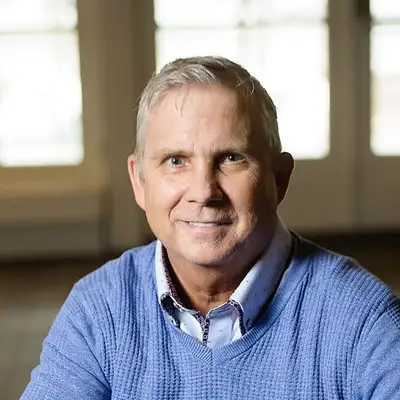
Welcome back to Built to Sell Built to Buy. I'm your host Sam Penny and today we're talking with someone who's lived and breathed sales for nearly 40 years. Glenn Poulos started out as a young technical rep and then he built two successful companies, MMWave Technologies and Gap Wireless before selling one of them in a multi-million dollar exit. But Glenn isn't just a founder, he's a coach, he's a mentor and the author of the book Never Sit in the Lobby where he shares 57 of the most practical hard earned sales lessons
I've ever read, if you want to learn how to build deeper customer relationships, close bigger deals and create a business your future buyer will love, this one's for you, Glenn. Welcome to the show.
Glenn Poulos (00:42)
Hey Sam, thank you so much for having me and thank you for the wonderful introduction.
Sam Penny (00:45)
Quite alright, Glen. Now, you started sales nearly four decades ago. You went on to found two very successful companies. I want you to take us back to that first chapter. What really drew you into sales and how did that early experience shape your thinking?
Glenn Poulos (01:02)
So the way I always tell the story is that ⁓ I'm a failed civil servant with the Canadian government. So I was working in the electronic department of the Canadian weather service called Environment Canada. And my boss pulled me aside and said I wasn't cut out for government work and that I should look at a career in sales and I might be better suited to it. take that for what it meant. I mean, at the time I just took him at his word. He was a really, really smart guy and ⁓ I started looking for jobs in sales and ⁓
Sam Penny (01:09)
Ha
Glenn Poulos (01:32)
And because I went to technical school for electronics, I was looking for an electronic sales job. so I made my foray out of the civil service and into the world of commission sales in 1985. And I kind of never looked back from there. That's how I ended up getting started. And I mean, can just keep diving in deeper and deeper as we go along here today.
Sam Penny (01:58)
Yeah, definitely. you've in sales and particularly in those early days, you work the phones, you've led teams, you've delivered quotes in person only to grab five minutes with the customer. What was it that really shaped your thinking and how can you share one story from your early days that really still influences how you sell today?
Glenn Poulos (02:23)
⁓ Yeah, so my mantra about selling as well, just to sort of lay it out there as well, is that, you know, I want to figure out how to get, act and stay in front of my customers and to be a pleasure to do business with always. And, you know, and I realized early on, ⁓ you know, that being a pain in the ass is not a good look, right? And people don't, you know, they don't tend to want to invite you back if you're not
you know, agreeable because I always worked the territory, you know, ⁓ maintaining the customer relationship under all conditions was met was paramount because I might win a deal, lose a deal, the deal might get pulled away. You know, there's a million things that can happen in a deal. ⁓ And a lot of them don't include you getting the order and you have to figure out how to, you know, how to behave so that when the next deal comes along, they're quite anxious to invite you back. Right. And ⁓
You know, and that, you know, that sunk into me very early on because I saw people, you know, let's just call it misbehaving when they didn't get the order, you know, going to the big boss, complaining, crying foul, you know, and things like that. And, you know, it would tend to, ⁓ you know, cause the customer to think twice about involving that customer, that salesperson on the next deal. Right. And ⁓ I know that didn't exactly, ⁓ you know,
answer your question about a specific deal, but it was sort one of the earliest lessons that I had learned in sales, right?
Sam Penny (03:59)
So then you built a really successful company ⁓ which became ⁓ quite a major supplier in the wireless tech space. What was the difference between being a sales rep and building a business?
Glenn Poulos (04:16)
So yeah, so I realized early on when jumping into sales, I call it kind of like a cheat code for ⁓ career advancement in the sense that when you get a job in sales, it allows you kind of like leap scotch in terms of earning potential without having a requisite, you know, sort of a 10 year career in education to go along with it, right? Like for instance, if you want to be...
you know, a regular doctor versus a brain surgeon, you know, there's a significant difference in pay and there's a significant difference in schooling and training, right? Where in sales, if you're good at your job, you can go in and in the first year you can make good money and you can double it the second year if you learn how to leverage systems, processes, you know, and solutions. And while I was learning the, you know, the trade of sales in my first ⁓ five years or so,
I realized that the owners of the company, they had an elevated cheat code where they had all the salespeople working for them, including themselves. And so they not only got paid when they sold, but they got paid when I sold, right? So the first thing I had learned was that by owning the company, you have an enhanced ability to earn money, right? Over and above just being a commission salesperson in and of itself, right?
Sam Penny (05:38)
Mm.
Glenn Poulos (05:39)
But in starting the business, you realize that it's more about the entire business and not just the selling piece, right? And so, ⁓ and I got a lot of black eyes along the way, which I'm happy to share a few of those stories about running the business. And now looking back, I feel like I had it nailed the whole way along, but no, was only...
Sam Penny (05:51)
Hahaha
Glenn Poulos (06:01)
you know, it takes a lifetime to, ⁓ to gain the wisdom of a lifetime, right, in terms of how to do things correctly, build the right people, hire the right people, you know, build the processes that are needed and, ⁓ you know, and hopefully, ⁓ you know, traverse the, you know, the ups and downs of the business without actually going going bankrupt or something, right. And so, ⁓ yeah, so that was sort of the biggest difference that I had found between being the sales guy and then jumping
In 1991, I jumped into my first business, ⁓ was the leverage that one would have in leveraging the team. But also the challenges of now it's not just about sales, but it's also about marketing. It's also about finance, operations, trade, banks, insurance, ⁓ many, many other things. ⁓
Sam Penny (06:53)
is one of the things that I absolutely love because I've had 25 years of running my own companies and you learn so much of every single aspect of the business. And one of the things that I particularly love about the research that I did before this interview was how you went from founder to author. You wrote a book called Never Sit in the Lobby and it's a cool title because it hits on so many levels.
Firstly, why did you choose that title?
Glenn Poulos (07:23)
So because the editor said the one I picked was awful. It was like sales factors, how to sell. I don't know, remember something. And the lady was categorical that it was just... And it had the word factors in it, because I call it winning sales factors. And she was convinced me that through...
Sam Penny (07:27)
Okay, what was that title?
Glenn Poulos (07:51)
Amazon keyword searching and things like that. It was just not a good choice, right? And she said, you know, you've got these great names of the chapters of the book, you know, and ⁓ one that really stood out to me was this never sit in the lobby. And she said, that's what I think you should call the book. And I'm like, well, you're the editor of FIFL. Well, let's do that. Right. And so honestly, I, know, I did come up with the name of the chapter, but I had help coming up with the name of the book. And it's just one of the 57 tips in the book. Right.
Sam Penny (08:08)
Hahaha
Glenn Poulos (08:20)
And so that's how I came up with the name and the story behind Never Sit in the Lobby is in the book. I'm happy to share it.
Sam Penny (08:28)
Yeah, fantastic. So
was there a moment that made you realize that you needed to capture your experience of sales and had to share it with the world?
Glenn Poulos (08:40)
Well, yeah, so the funny thing that is that way back in the 80s, I had bought this ⁓ leather bound notebook and it was kind of, cause I was realizing that I was getting this mentoring was going on with the, the four owners of the company I worked for. These guys were like really, really good natural salespeople. just, and they followed a set of, ⁓ you know, of rules and I saw them doing
a lot of things repetitively, right? Like the whole opposite of insanity kind of thing, doing the same thing over and over and wanting the same results kind of, you know. And so I started to write them down and credit and sort of try to come up with catchy names or titles or stories or jokes or something to go with these rules. And I kept that book. I still have the book to this day. And it's from that book of all these little rules.
on how to behave at all the different steps along the way and how to get act and stay in front of your customers, where I pulled all the information and I started sharing it with people years ago. And a lot of times I would try to sell it, ⁓ share the rules with much fanfare and humor as possible. And people are like, my God, you should come and share this at our sales meeting. And then people are like, you should write a book. And of course I never did. And it wasn't until the pandemic.
Sam Penny (09:57)
You
Glenn Poulos (09:59)
when at the time I was in Canada and we were locked down for a long time. And I thought, what better time not being able to even leave your home, right? For me to maybe buckle down and write the book. So I ended up Googling how many words do I need in order to write a business book, right? didn't even, so this was before ChatGPT. so I was like, how many words do I need? And it said,
you know, average business books about 75,000 words. So I basically took all these tips and I said, and I also Googled, how do you write a book? Right. And I saw this podcast and the guy said, just get up every morning and write 500 words until the book is done. Right. And so the way my workday was structured, I couldn't really do the 500 a day, but I said, you know what? I'll do the, I'll do five times 500, 2,500 on the weekend.
And I'll do that every weekend without fail until the book was done. Right. And that was how I did it. And I get up very early on Saturday and Sunday mornings and I would just write until I got to around 2500 words. And when I got 75,000 words, as I love to tell the story, I sent it to the editor. And in addition to telling me about the title, one of the editors said, Glenn, you can't say the F word that many times in a book. And I said, okay, why don't we, why don't we agree? Why don't we agree on 71,000 words?
Sam Penny (11:21)
Hahaha.
Glenn Poulos (11:22)
And we'll call it a day, right? And so ⁓ that's how I sort of came up with the book and how I came about to write it. But it was really just a list of chicken scratch little rules that I'd written over 40 years, approximately 40 years, you know, ⁓ and finally got the discipline to get it all written down in a format that, you know, I wanted it to be the kind of book where you could just flip it open to any page.
and read about a story or a rule, they didn't necessarily require you to read the rule ahead of it or behind it in order to get something out of it, right? And so, it's not like the challenger sales model where you have to follow this huge process. So you can flip the book to any page, read a rule and say, well that's common sense or whatever. And I'm like, yeah, well, common sense is not always that common. Right? And so.
Sam Penny (12:16)
And that's what I really
love about this book. It really reads like a field manual. It's funny, it's direct, it's practical. So who did you write this book for and what kind of feedback have you got from readers?
Glenn Poulos (12:31)
Yeah, so whenever I think about the person that's reading it, I'm sort of thinking about the person, know, guy or gal who's kind of like 25 to 35 or whatever, just sort of going into account management and they're trying to figure out their way through all the ways and means to ⁓ be a good salesperson. And I'm really ⁓ targeting, you know, I hadn't planned that the pandemic was going to create such a problem in terms of getting in front of customers, right? And ⁓
you know, prior to that, everything was done face to face. were, everything was a sales call, you know, for the most part, there's no such thing as like zoom selling or anything, you know, teams, teams calls and all that stuff. Right. And, ⁓ but still, I still, pushed to this day that, you know, the real, the real solid money is the one where you're showing up to the customer and you're doing the sale. Right. And so I'm appealing to the person that that's, that's, ⁓ showing up in the lobby.
not sitting down because we never sit in the lobby, And closing deals, right? And so, and I'm imagining them saying to themselves, hey, I have this fancy, there's chapters on it which tell you where to sit at a business meeting, at a lunch, and there's a chapter on what to order for dinner. There's chapters on empathy, sympathy, and compassion, and what they mean and when to apply them, and how to do active listening.
you know, how to build genuine rapport with your customers. And again, it's all about, you know, and I always just try to say it in the simplest of terms, just not being that pain in the ass sales guy, right? And there's like simple little rules about, you know, one of them, which I love is always show up with something in your hand and something in your mind. people are like, yeah. And so I just learned a long time ago that, you know, one, of course,
Sam Penny (14:07)
Hahaha
Explain that.
Glenn Poulos (14:24)
I never sit in the lobby. And the reason I don't sit in the lobby is because I got caught numerous times being distracted and it was a bad look, right? Like the guy would come out and he'd say, are you Glenn? I like, was all like engaged in something, right? Or, you know, you could be, ⁓ worst thing is using the lobby phone, trying to call your next guy and the guy comes out and how do you hang up on the guy on the phone or it's really, really bad look, right? And so I realized the best thing is just to be standing at attention, not distracted, not on your phone.
waiting and just show up a couple of minutes early. And then when the person walks out, have something to give them and something to tell them, right? Something in your hand, something in your mind. It might be the reason that you got the appointment with them. For instance, they might've asked for literature, a quote, you know, some kind of documentation or something like that, which is why one of the other main rules at the beginning of the book is never fax the facts or ship the shit, right?
And the reason why is because those are all golden opportunities to show up in the lobby and not sit down and have something in your hand, which is the literature they ask for, the quote, right? And something in your mind, which is, wanted to get your first, you know, here's the information. I just wanted to point you at some important stuff and, ⁓ you know, draw your attention to it. Or maybe you're just dropping off a new Stanley water mug that you're giving your good clients, right? And again, that's what's in your hand. There's, you know, pens, you know, ⁓
mouse pads, know, water bottles, you know, all the litany of stuff we give away to customers, right? But always have something in your hand and always something to talk to them about, right? So there's no, right? And then of course, the, one of the absolute golden rules is always ask for a mini tour. And ⁓ I stress this so much, which is you want to get behind the veil, right? Behind the Wizard of Oz curtain, because you need to see how the business runs, right? And so you ask for a mini tour and the people are like, you know,
what's a mini tour, right? Like, why do you call it a mini tour, right? I'm like, because tours take all friggin' day, right? Like, nobody wants to go on a tour. And so by saying mini tour, saying, because if there's any hesitation, you say, just a quick look around, I just wanna see where you're gonna use my software, my service, my hardware, my whatever, whatever it is you sell, you wanna find the situation where it's being used. Because by getting behind the veil, you're going to be, you're going to be learning about.
Sam Penny (16:26)
Hahaha
Glenn Poulos (16:48)
whatever competitors are in play or not in play. And you're to be walking by all sorts of other departments and things where you might, because if you're a broad salesperson selling a broad range of products, you might say, my God, I didn't even realize they bought those kinds of things. And I didn't, hadn't even been chasing them for that because they never got past the lobby and they're buying it from your competitor. Right. And so that's why you want to get in, get in behind the door for a quick tour. See, don't make a nuisance of yourself, but you're all the while.
You know, you're looking, you're looking for, you know, how you fit in. I, you know, is it a level playing field? Is there a competition? Are they, you never got fired for buying IBM account and it's all IBM and you never, you're not getting the order. You're just there to keep the IBM audience honest. and, and, you know, and then once you're back there, you can, you can make out lots of other maneuvers. Like for instance, you might say, Hey, I didn't realize that you use a similar product that we sell in this other department.
you know, who's the boss in charge of that, right? And you know, that's Jack or whatever. well, would you mind me taking me by Jack's desk so I can drop my card off on the way out the door? And hopefully he will do it. And a lot of times they will. And you know, you can give Jack the card and if you're lucky, you know, you can say, hey, you got two minutes, you know, and and Jack say, you know what, I'll walk him out, right? And so the other guy leaves, now you're in front of Jack and
And a lot of times what I'm doing is while I'm in there, I'm making future appointments, whether it's a week from now, a month from now, or six months from now. And it helps me to build a perpetual prospecting system, right? And ⁓ the other thing, again, and obviously it's in the book, is you never forget a face, right? While you're behind the veil, when you're not sitting in the lobby and you were there 15 minutes early,
you were in your car sitting down and that's when you whip out your phone and you go through and you figure go back through every person you've ever met at that account and you bring their face back to the front of your memory from the back of your memory, right? Cause if you said you've been at it 25 years, you know what it's like pulling faces from the, from your, your long-term memory, right? And, that, and that, that hesitation when Sally walks down the hall and you know her name, but you can't get it.
Sam Penny (19:00)
The vault.
Glenn Poulos (19:11)
And she's like, hey, Glenn, and you're like, hey, Sally, right? That's a super bad look. And guess what? Sally is hurt. She's crushed by that, right? Because she remembered your name. You didn't remember hers. But when you're walking down the hall and you're like, hey, Sally, good to see you, know, blah, blah, blah, how's this, how's that? And you've refreshed your frame on everything you know about Sally while you were in your car waiting to move to the lobby and not sit down so you could ask for a mini tour. You just wanted to see what was behind the veil, et cetera. ⁓
Again, you're just portraying what's a good look, right? And so that's why never forget to face another golden rule, you know?
Sam Penny (19:46)
Yeah. So.
so many great little pockets of gold here, Glenn, and I'm sure there's gonna be a lot more in this conversation. One of the things about salespeople is that most people think of them as really slick, greasy, pushy, but you've got this mantra of always being a pleasure to do business with. How does that show up in practical terms?
Glenn Poulos (20:16)
Yeah, so, you know, I spend a fair bit of time going on about what, you know, building genuine rapport, right? And that's through, you know, one of my golden rules is God gave you two ears and one mouth, so you do the math kind of thing, right? You should be listening twice as much as you're talking and you don't want to imply familiarity, right? I have another chapter called implied familiarity also breeds contempt, right? Which is...
It builds on the story of where, you know, if you've ever gotten a car for a weekend and driven with four guys across a, you know, some state or province or what have you, and by the time you get back, you want to kill the guys because you've been armed and you've been hyper, you've been, you've been hyper familiarized to them. You know I mean? Like, you know what they smell like, you know what they sound like. I think you understand what I'm trying to say, right? That's where the saying familiarity breeds contempt comes from, right? And that's why.
Sam Penny (21:03)
Yeah.
Glenn Poulos (21:13)
We all go home to our own homes every night, right? We don't live with each other. And I realized that there's a thing called implied familiarity where these sales guys come in and they're like, ⁓ you we should go golfing. like, and you just met them and like, I don't like golfing. I don't golf. Like, so why would I go golfing with you? Right? Like, so not only like, it's just so misplaced, right? And so, you know, you want to be repealed and always trying to build rapport in a genuine manner.
And so, ⁓ know, that's how, and these are all the ways I try to build up not being, like to try to be a pleasure to do business with, in other words, right?
Sam Penny (21:58)
Yeah, Glenn, you're a big believer of face to face interactions and obviously the modern world and because of the pandemic, we've really retreated behind the computer screen into a world of virtual meetings and Zooms and email. How do salespeople today and also founders, how do they apply the principles of a face to face interaction?
Glenn Poulos (22:09)
Right.
I love this question. And usually it comes at me in a slightly different angle. It's more people are challenging me that it can all be done over zoom, right. And a lot of things can be done over zoom. And I agree, right. But the, you know, I don't know if you've ever seen on on Instagram or Facebook, any of the video clips by Grant Cardone. And ⁓ so many of them are on his jet, right. And you know, and it's got
the GQ on it and all, or the GC I should say. And so when Grant bought that plane, you think the guy that sold them and got the $50 million order for the plane sent him a video link to a Zoom call and he picked him up on a video call and he said, hey, Grant, hop in this limousine and we're gonna virtually drive you to the airport. And I'm gonna introduce you to the flight crew. We're gonna introduce you to the pilot and the co-pilot.
We're going to virtually fly you from Miami where your office is to ⁓ New York for lunch, right? And then the pilot's going to fly to Miami and the stewardess or flight attendants, whatever, are to fly to Miami. You're not. You're going to stay home. And we're going to go to New York, have lunch, fly back. And when we get there, you're going to send me a check for $50 million for a plane. And I do that to make it the most craziest example.
to show that if you had $50 million and you were buying a plane, there's absolutely categorically no way in the world you would ever buy it without going for a test drive, correct? So my attitude is, the guy that gives you the best test drive is the one that gets the order, and it's the same whether it's a $5 million item, 500K, 50K, or 5K. It all holds true throughout the whole. Now there are products that like software as a service and things like that, but
Sam Penny (23:50)
Yeah.
Glenn Poulos (24:10)
I can assure you that if you're selling million dollar SaaS systems, the guy who got the order has definitely visited the customer because he needed to get behind the veil because he needed to find out who the competition was, he needed to find out if had the funding and the resources and the support ⁓ before they would go through all these other hoops and things and what have you. And so you need to realize that there are some things you can do virtually and some things you can't.
and that the real winners are the ones that get behind the door and they figure out who the people are, who they need to talk to, you know, and there are so many things you're not gonna find out from Zoom. Like you're not gonna be able to say to the guy on Zoom, hey, could you like take the camera and zoom around your office so I can look at the swag that all my competitors have sent you so that I can figure out who my competition is? Because they're just gonna say, no, we don't discuss competitors, right? So you'd have no idea who you're competing with, right?
You have to get so now again, people that are in a hyper virtualized world will argue to the end. But, but again, most of the people that I'm talking to about selling are selling things that are have a real world aspect to them. And eventually someone needs to visit the customer. Right. And, yeah.
Sam Penny (25:24)
So then how would this practically
show up if someone's doing say a $5,000 sale ⁓ to a client that's across the country? What's a practical tip for them to be able to sell that?
Glenn Poulos (25:38)
So you want to be able to get as close to the client as possible. if you're in New York and you're selling $5,000 widgets and what have you, you have one office, you don't have a guy in Portland or whatever, the customer's in Portland, then clearly you're not going to get on a plane and fly to Portland for a $5,000 sale, right? And so in that case, then yes.
If you don't have local representation that can visit the customer, like local reps or whatever it is, then you will need to do your best via some kind of a virtual methodology or what have you, right? But then you need to structure the manner in which you do it, right? You need to be able to give the best possible virtual presentations. ⁓ I have ⁓ a technique I shared on my website called the punch perfect pitch and close on how you... ⁓
you figure out what the customer's looking for in the way you, and like I said, I call it the punch, perfect pitch and close, right? And so you structure a presentation, whether in person or virtually, in order to ⁓ best present your product and ⁓ try to get an order, right? But yeah, like, mean, you can't be in Portland if there's only five grand on the table, because there's not enough money to pay for the flight, right? And so,
You know, but yeah, but I mean, that's not a lot of times that's not really the person that I'm talking to. I'm talking to the guy who's selling $5,000 item, but there's 50 copies of it. You know, there's something like that, right? Or managing a territory and they visit their territory on a regular basis. So then it's a matter of scheduling time management and, and you know, and make sure you're always.
you know, moving around your territory in a logical manner and you, you know, you visit them when it's appropriate, right?
Sam Penny (27:38)
So clearly these strategies, it's more than just the tactics, it's more of a philosophy. You say freedom begins with no, and that's certainly not something that we hear in sales a lot. So why is that important?
Glenn Poulos (27:54)
Yeah, the concept of freedom begins with no, it boils down to a lot of times, for lack of better term, of weak salespeople won't have the resilience or the state of mind or presence of mind or whatever to be strong when it's necessary. So for instance, they've done everything right, they visited the customer to the best of their ability, whether it's virtually or in person, they've done everything right, the customer's ready to go.
you've given them the final proposal and really, you you're there to pick up a signed document and the guy's like, I need another 3%, right? And it's sort of, so the example is kind of, you know, the guy that does it wrong would say, ⁓ okay, well, maybe let me talk to my manager and gets back in his car and drives an hour and a half back to the office and knowing he's gonna get in crap from the boss for not, know, whereas,
And so the moment he says anything other than no, all the work shifts onto him, right? All the worries on him, all the stress is on him, all the effort is on him. has to talk to the boss and he's got to go back and tell the guy no. And he should have just said, well, you know, we've, talked about price bump prior. We negotiated you a slot in production, you know, starting next week or next month or whatever you wanted eight weekly time. need to hit our number. If you want to hit your, your start date of eight weeks from now.
I'm going to need an order by today or tomorrow at the latest and we've already led with our best price. We don't have any more room to move on price. So if you want to meet your delivery commitments, you want us to meet our delivery commitments, we're going to need to get an order already today. So hence you're saying no, right? And so the way I try to get people to think about it is, like when, think about when you were younger and you were a teenager and people would say like, hey, do you want to go to the movies?
no, I can't. And they're like, why? you're like, well, because I can't afford it. Right. And so the town I come from, like, I can't afford it was that's a full sentence. Right. Like that's a full like nothing else. Like when you say I can't afford it, that means I'm not coming. Right. Like, don't bug me. And and so that's what I mean by by the no. Right. It's no is a full sentence. And so everything, everything changes when you give the maybes and yeses and all tries and things like that. Right. And so
you should be prepared for it. You should have done all of the homework up front so that you're able to say no, you know, in a responsible way, you know, but ⁓ yeah, but I mean, if you kept 3 % in your pocket and the guy asks you for the 3%, well, you can give it to him at that point, right? And then he says, well, what about free shipping? And you're like, well, no, I can't. mean, the 3 % was all I had. I'm up against the wall. If you want to hit your delivery commitments, I'm going to need to get an order from you, right? Like eventually you have to learn how to say no, right?
Sam Penny (30:51)
Yeah, fantastic. another great little saying that popped up during all of my research prior to this was, you've got this phrase, and I love it. Thank God it's broken. How do you learn to see customers' problems and build a relationship from that?
Glenn Poulos (31:13)
So yeah, counter intuitively something breaking is the number one way to build the best possible customer relationship. it's, again, it's not for the weak of, it's not for the lazy or the weak minded person, right? Because most people are like, it breaks and they say, we'll call customer service, right? I'm exact opposite. I'm like, if it breaks call me, right?
They don't remember you for buying it from you. They remember what you do when it breaks, right? And how you treated them when the pistons weren't lining up or something was cracked or broken or chipped or didn't start or didn't work or the throughput wasn't there or whatever. And a lot of people are like, and they shirk responsibility, which sends a huge message to the customer that you don't care. Whereas,
when you snatch that phone out of the cradle and you say, my God, the pistons are broken or whatever, let me get my mechanic on that right away. And you baby them through it in an over the top manner. And they're like, they feel comfortable every time there's an issue calling you. And eventually over time, have to kind of like, you don't want it to be abusive of people's time.
Right? You know, like maybe it's inappropriate the way they're doing it, but you can train them in a gentle manner, right? But they know they can always call you when there's a problem and you will be there to answer the phone for them, right? And ⁓ an example of that was that my old company, my last company, ⁓ Gap Wireless, if you went 0000 on the phone, you know, like if you've ever called somewhere and the first thing you do is go 0000, you just pound on it, right?
⁓ instead of like one for customer service, two for this, three for that, And it would immediately send the phone call to me and I would take the call, right? And 99 times out of a hundred, I would be able to snatch the phone and grab it and you know, blah, blah. You got this, that, and the other thing. And I'm like, okay, well, I'm the owner of the company. I can see if I can help you. Right? And they're like, I got the owner. And I'm like, you hit zero, zero, zero, zero. That's what you get. Right? And they're like, wow, that's incredible. Right?
Sam Penny (33:30)
you
Glenn Poulos (33:35)
That's never happened before. so, you ⁓ know, the, that's another one of the ways of being a pleasure to do business with, right? Answering the phone, being there, not this perpetual voicemail and, and now again, you know, this AI shenanigans of, you know, AI solving all your problems. And at the end, you still don't know how to make your software, talk to your printer or whatever, right?
Sam Penny (34:00)
So let's
talk about ⁓ a world of automation, particularly in sales, and sales people are relying too much on this aspect of it. What is it as sales people we need to relearn so that we're not just going through the processes of automation, automating emails, automating every other aspect of the process?
Glenn Poulos (34:24)
Yeah, so I just challenge everyone to look at it like a fine art, right? Like in the sense that there's tools and techniques and things that you can use in order to be more productive. if you don't have the, like, or a music production or whatever, there's all sorts of electronic gizmos and gadgets. But if you don't have any musical talent, you're still going to have a lousy song at the end of it, right? And so I challenge everyone to use the tools to improve your productivity.
but not to replace your productivity, right? And so I use it all day long for all sorts of things. ⁓ know, analyzing bid boards so we could find more opportunities to quote on and then helping us to structure our RFPs and respond in a more timely manner by filling out a lot of the boilerplate and taking care of all that for me. Analyzing contracts for, you ⁓ know, the nine or 10 key points I would need to look at rather than having to read a hundred page document.
you know, which is mainly boilerplate for the most part, right? Instead of coming up with two or three ideas for new product promotion, know, AI can help you come up with 10. And then you can curate the 10 down to what you think is the most appropriate. But again, you're sort of using it as you know, as heavy machinery, you know, allowing you to do more, but not in place of you, but, you know, but helping you.
you're still the curator of it all, right? And that's where a lot of people just want to go, like write me an email that says that on the cut and paste. And, know, ⁓ I don't recommend that. I would never recommend that to anyone, right? You know, but you can get it to craft an email for you. And then, you know, and then you but then you have to reread it, you have to make sure that it's appropriate. Yeah, you know, and ⁓ so
Sam Penny (36:02)
Yeah
I think
it's always important to have a last human touch on everything that goes out, whether it's a quote, whether it's the email, any piece of automation. Now, Glenn, you haven't just sold products, you've also sold your company, Gap Wireless. What did you do early on that really made it attractive to potential buyers?
Glenn Poulos (36:22)
Exactly,
So, ⁓ yeah, so I learned a lot. ⁓ I sold two businesses, right? And ⁓ one was MMWave, which I sold. ⁓ then I started Gap Wireless, and Gap Wireless sold in 2022. ⁓ Gap Wireless sold as I often explain to people as the very well-run sewing machine, right? Like our Swiss watch. was all things were in place and all systems and processes were defined. ⁓
you know, due diligence went very, very smoothly. But I learned in the end that actually the, didn't work a hundred percent to our favor, right? Like I thought, well needed our ERP in a perfect manner. We needed to, you know, we need to be able to deliver them six binders of perfection and then pick up a check, right? But the reality is, that for the private equity companies and people like that buying businesses, they want to come in and they want some rough around the edges things that they can put a bit of polish on and get quick.
indications of an increase in the value and so they'll often pay you more ⁓ for that right or more for less in a minute if I can say it in that way and so you know ⁓ but the one thing you know that's super important when you're selling your business is you need three good years because most companies are gonna evaluate you on your last three years performance and so every time you have a lousy year you kind of reset the benchmark of when you can sell your company and ⁓
You might be able to convince them to look the other way because of an anomaly or something like that, but more often than not, they don't. And so, I learned from the first business, they looked at the last three years times the EBITDA multipliers, et cetera. It was the same with GAP Wireless. And again, so like I said, I wanted it to be as polished as possible, but I should have left the shine off some of it.
because I think I would have actually done a little bit better. And it proved that that proved to be true when they bought other businesses after ours. And I saw that the guys were getting slightly better multiples. And I asked why, and they're like, well, because you have a Swiss watch. And when we apply your Swiss watch on their Timex, right, we're going to get a multiplier in terms of the valuation on that business. And so in a way it's worth more, right?
And so I'm like, wait a minute, I spent $2 million on an ERP. It wasn't 2 million, but you know what? But I spent 2 million on an ERP so he could get the multiple, right? Like doesn't make sense. And again, I'm not the &A guy, but there's a lot of what I'm saying that you want to leave these areas where they can go in and make these quick changes and get these boosts because that's what drives private equity, right?
Sam Penny (38:58)
Yep.
You speak about the Swiss Army Knife, so you're clearly big on systems and processes, but also creating teams so that you're not personally involved. ⁓ How does your thinking revolve around building teams where you're not stuck in the weeds day to day?
Glenn Poulos (39:45)
Right. you know, and I mean, I really have to call attention to ⁓ programs like EOS and similar programs, EOS, the entrepreneurial operating system, but there's many other ones like they're out there, but that's kind of where I got my start. And I realized the magic in, you know, structure first, people second, right? And process over people. then
you know, right person in the right seat. So you find the process, you find the structure, then you assign the people, not the other way around. And the mistakes I made and others make are they kind of take the people and they assign them randomly to processes and ⁓ procedures, but it's not the right person in the right seat. And you really need to set up what you need in order to run your business, then figure out what staff is needed. Look at the staff available.
and apply those people to the processes you have or recruit for the missing links that you don't have, right? And so, you know, this was, and now it just comes naturally to me. It's just like part, it's just part of my DNA in everything that I do, you know, structure first, people second, right? And, you know, you need proper finance, you need proper operations, you need proper sales, proper marketing. And am I the right person? Is that the right person?
Sam Penny (40:58)
So.
Glenn Poulos (41:05)
you do I have the right person? Yes, no, no, fine. We got to recruit for it then, right?
Sam Penny (41:09)
Was there a moment where you realized that this company can run without me and how did that feel?
Glenn Poulos (41:18)
⁓ Well, actually, so to me, like, that's the perfection, right? Like, that's the I don't have the right word. I wish I could come up with a really good word for it. But yeah, like the unicorn moment, right? Where it's perfect. You kind of come to work and don't have to do anything. But everyone thinks you're doing everything right. And ⁓ because and so and Gap Wireless, you know, which was sold and they changed the name and whatever. And now I've moved on and doing something new. But I mean, ⁓
Sam Penny (41:25)
The golden egg.
Glenn Poulos (41:47)
I had gotten it to the point where there was really good people at the head of each one of process, know, ops, finance, marketing, et cetera, right? But they all needed me, like they didn't need me for the 90 % of their day, but there are times where they needed me. I, know, and it wasn't like I was off in the Bahamas, like on the beach, I still went to work every day, but I didn't have to do that much work, right? Because I was just answering questions and making decisions that were
above their authority level or appropriateness, you know, and what have you, right? And so I was acting as the integrator, if you're familiar with EOS, right? And so the, you know, and also had to be provide vision, big thinking, work on big deals, big decisions, things like that, right? And so when you can get the right person, the right seat at the top of each one of those, it's perfection. and
there's no better way of doing it because you can go away for a week on holidays and realize that you don't actually need to be there most of the day. You just feel better when you're there, right? And, cause hey, if they need you to approve a $100,000 investment or something, you can do that from pretty much anywhere, right?
Sam Penny (43:08)
You speak a lot at sales festivals, podcasts, workshops. What kind of stories or rules really get the biggest reaction from the audience?
Glenn Poulos (43:19)
Yeah, some of the ones that are really controversial, they have messages, there's a few stories in the book where the salespeople acted, we'll say untoward in a way, and people are like, that doesn't sound kosher, especially now in this very prim and proper sort of world we live in these days. ⁓ But it was where we stormed out of a customer site once, right? ⁓
refused to sell to them. said, we refused to sell to you. ⁓ the, so these, these, some of the, those are some of the stories that really resonated the most $10 million in diamonds as one as well, where, ⁓ but the, sorry, just to back up, I don't want to leave a thought hanging, but the one where we left the company was we didn't actually get out the door because we were demonstrating an instrument. The guy was rude to us. He clearly had.
IBM underwear on as we used to say, right? And it's like, I don't know why you've invited us here. Maybe you want to keep the competitor on us, whatever it is, but we're not wasting valuable time. We brought extra people here to show this to you. And my ⁓ coworker grabbed the power cord from like four feet away from the wall, ripped it out of the wall. And he said, I refuse to sell to you. And he says, Glenn, pack it up. Let's go. We're leaving. And to make a long story short, the...
The guy apologized, we explained to him the way he was being, he recognized it and he agreed and he ended up buying a multiple of units of the unit we were selling because it was appropriate and we were there for an appropriate reason. And it ended up being an amazing sale. And the lesson is you gotta value your own time and your own, you you have to place a high value on yourself as well as the customer, right? The customer can always be right or whatever, but he can't treat you wrong.
Right? And so, ⁓ you know, and then another story that resonates really well is $10 million in diamonds, where I used to work in a jewelry store as a teenager. And 10 years later, went back to the, and the guy I worked for had opened his own store. And I went to the store to say hello. And ⁓ it was this Italian guy who had polio as a child. And he was a very affected man. he, you know, he was in a wheelchair and ⁓
but he had this over the top personality, heavy Italian accent. ⁓ Believe it or not, he was the crazy lazy man or whatever. And people just loved him, right? And, you know, and I went into him and I said, is Romeo here? And she said, yeah, he's in the back. Let me get him for you, Glenn. He'll really like to see you. And so he comes wheeling out, right? And I'm like, Romeo, how's it going? He's like, it's amazing. It's amazing. And I'm like, how's business? He goes, my God, you never believe it. goes,
Sam Penny (45:49)
You
Glenn Poulos (46:09)
I could be selling, you know, the $10 million in diamonds, but I'm so busy in the back fixing watches. Right. And I'm like, what? Why don't you just hire a watchmaker and come up front? But he was so busy in the watchmaking, being a watchmaker, which is what he learned 40 years ago, that he couldn't get past it to sell the diamonds. Right. And so that became a saying which resonates through my entire 40 years of selling, which was, you know, $10 million in diamonds. Right.
Sam Penny (46:20)
Hahaha.
I love that analogy.
Glenn Poulos (46:39)
Like don't
get stuck fixing watches when you could be selling diamonds, right? And yeah.
Sam Penny (46:44)
Yeah, you
do a lot of coaching of reps, execs, founders. What is one common mistake that you see across the board?
Glenn Poulos (46:55)
The biggest thing I help people with is, because most of my coaching is done in a collaborative sort of ⁓ quid pro quo kind of manner. Like I have my own new business I bought in Florida, which is why I moved to Florida. I've got a visa, US visa. I'm living here now. And so I have a day job, right? And I'm redoing, you know, I'm on Glenn 3.0, right? And, but I spend a lot of time with executives in my cohorts, you know, like in entrepreneurial workshops and cohort groups and.
like EO and PEO and things like that, right? And I share myself liberally and generously with them. And mostly where I'm helping them is in the area of like sales structure and management structure and compensation and benefits and things like that. And that's where I find the misalignment is the greatest that the compensation never lines up with the company goals and the company setting its goals and the people are not being rewarded for it. The people are being rewarded and the company are not hitting their goals.
Right? And so an area where I've learned a lot over the years, just through trial and error and examples and what works and what doesn't work is on how to structure results-based compensation and things like that. ⁓ so that's the majority of the kind of coaching that I do. And I'm usually, again, I'm not really charging for this. It's something I'm more trading for other executive. ⁓
knowledge compensation if I could say it that way. I'm arbitrage or not arbitrage but barbering you know and I'm just paying it forward.
Sam Penny (48:27)
Now Glenn, your book never
sit in the lobby. It's packed with 57 pieces of gold. And they're just really rules to live by, particularly for a rookie rep. Now, if you had to pick any three of those 57, what would they be and why?
Glenn Poulos (48:49)
so some of the ones, know, the golden ones ⁓ that we've already talked about, like Freedom Begins with No, ⁓ but ones we haven't talked about, like they're all little favorites for me, to be honest. So it's hard, I don't like being disingenuous, right? So like I don't have like three and I don't have like three ready to go that are my favorites or, because I actually love them all. And so...
Sam Penny (49:02)
Hahaha
Glenn Poulos (49:13)
But the ones that I've shared are really important. Some other ones that haven't come up yet is greed-based learning, WSP, show them the WSP, which is the winning sales presence. And then anything around the act of listening and the rapport, find people really need to, that's a huge area of learning to listen.
and actively listen, you know, and there's exercises in the book on how to do it. ⁓ you know, ⁓ and so, yeah, so rapport. ⁓ Yeah, like I said, ⁓ WSP, greed-based learning, which I call GBL. And ⁓ yeah, those are some of the three that haven't sort of come up yet that are favorites.
Sam Penny (50:06)
In the, I want to touch on AI now because AI is really changing so much, know, sales, marketing, finance, every aspect of a business is being affected now. Where do you think human connection still has the edge?
Glenn Poulos (50:10)
Okay.
⁓ Well, the connection has the edge when you're communicating, like when you're talking to someone instead of talking to an AI, right? Like, cause I've, I've found that there's certain mundane things where AI can be very ⁓ functional and work well. But the last mile, which is the real, like I often tell people try to learn the difference between sales and marketing and which one you're better at and do that, right? Because like sales is when you're in front of customer closing the deal.
doing the presentation, you're kind of the guy on stage performing the play, everything else is marketing, right? Getting you in front of the customer, right? And so AI is really amazing at coming up with ways of doing that, but it's not going to relate to the, it's not gonna relate to the customer. It's not gonna be able to, at least not at this point, understand the micro,
The word escapes me, but you know, when their face changes slightly and you could tell you're off base or you're on target and you know, things like that, that you need a human for. So that last mile of the selling has to always be done by humans, but getting more at bats, that's where the AI really helps you, right?
Sam Penny (51:41)
So before we wrap up Glenn and throwing this back to the listener, whether they're a founder, whether they're in sales, whichever function they're in, what do you think would be three things that someone really needs to start implementing this way to sell more widgets, more software, whatever it is?
Glenn Poulos (52:05)
So, yeah, you know, now you're like, now I have to like remember like 57 different things from the book, right? I've already pulled 21 of them out of my head, right? So I don't actually have it sitting here, but the really the most important thing that I always want to share at the end with people is the master golden rule, which I feel it's a one-off, but it's worth three of everything.
Sam Penny (52:12)
Hahaha
Glenn Poulos (52:33)
Um, and if I can think of a couple more at the end, I'll gladly give them to you. But, um, and again, like you can see, I'm just trying to be blatantly honest, you know, et cetera, right? But there's a golden chapter called you only get forever to make another impression. And, and it's the key, it's the, it's the cheat code to you building your career. And I've used it my entire career since college, all the way up to where I'm at today, every step along the way. And.
I've watched myself use it to allow other people's career to get built as well. And what it is is like, know, people are like, what do you mean, you'd only get forever to make another impression, right? I thought it was, got to make a good first impression. I'm like, yeah, that's what my mom taught me. And she was right. But I said, but you have to understand like in the world of business and career building and whatever, like every impression is a first impression, right? And so what you need to curate your, you need to curate your career.
like it's a museum, you know what I mean? Like you're putting the best museum in the planet together. And like everything that you're doing has a measure of, ⁓ know, specificity to it and deliberateness to it, right? So examples, right? When you hear the boss walk in the office and you hear their footsteps, right? Immediately switch from whatever you're doing to being in hyper, the best employee they've ever met mode.
Right. And some people that say that doesn't sound that sounds disingenuous or whatever. It's like, no, it's just like, don't be on your phone. Right. Make, know, when the boss walks by, say, hey, boss, I got this deal I'm working on. It could be really good. Can I get two seconds of your time? Right. And the other nine guys in the room aren't doing it. Right. And so the thing is what happens over time is it builds a, you know, it builds a bank of, of memories inside, right. Of, of impressions that you've built when you're at a trade show.
most people, it's where they fail miserably, right? Their feet get sore, they sit down, they start mucking about on their phone, they wanna constantly leave the booth. I'm like, no, when you're at the trade show, you're either talking to a customer, in the aisle pulling customers into the booth, and if there's no customers walking by, you're figuring out who the head of whatever departments are at the show, whoever you've brought from head office, you're meeting each one of them individually and asking them to give you a career lesson in their particular
You know, maybe there's like six product managers. You want to talk to all six product managers. You want to each one of them to tell you the cheat codes to each one of their product lines and what makes it. And at the end, and you want to arrive early, you want to help them set up the booth. You want to stay late and help them tear down the booth. And, you know, ⁓ you don't want to be wandering away for hours on end. where's Glen? he took off again. You know, you don't be leaving early. ⁓ and over time when it, as I always say, when it comes time to pick the regional manager for Western.
region, your name pops up immediately. The other names wash away to the side, right? And so you want to make sure that you figure out, you know, where do you want to go? I want to go from the warehouse to CEO. Then you just need to figure out who you need to kill along the way, right? And you need to make sure you outperform each guy or gal that's in your way on your way from the warehouse to the CEO. And there's plenty of guys.
and plenty of examples on the stock exchange of where men and women have gone from the warehouse floor driving a tow motor to being the CEO of a company. And they did it by making every impression a lasting impression.
Sam Penny (56:06)
great pocket of gold Glen to finish with.
Glenn, this has been packed with gold, from never sit in the lobby to becoming the kind of salesperson and also founder that customers actually want to buy from. You've given us a real masterclass in what real selling looks like. Now, Glenn, before we wrap, for anyone listening who wants to learn more from you, get your book or maybe even bring in to speak. Where's the best place for them to go?
Glenn Poulos (56:32)
They can go to my name, glennpoulos.com and all the connection points are there. if they, know, more ⁓ easier ways to go to LinkedIn, connect with me there and they can, I'm on LinkedIn every day. I'm a top voice on LinkedIn. post every day and super active on LinkedIn. That's the easiest way to get a hold of me.
Sam Penny (56:50)
Absolutely fantastic and I'll make sure I include those links in the show notes. And if this episode gave you a fresh perspective on sales or just reminded you of the power of showing up well and often, please pass it on. Share it with a founder, a rep or a leader who wants to build a business worth buying. I'm Sam Penny and this is Built Sell, Built To Buy. Thanks for listening and we'll see you next time.