Sam Penny (00:00)
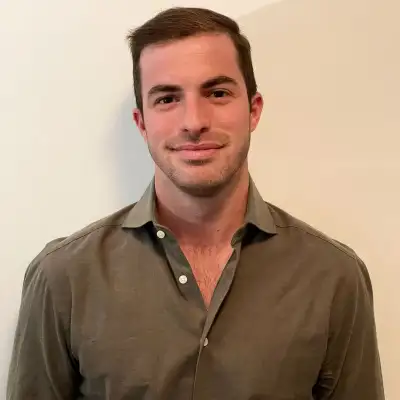
Welcome back to Built to Sell, Built to Buy. I'm your host, Sam Penny and today's guest has built, scaled and led some of the most recognisable names in the flexible workspace world. But his real craft is building culture at scale.
Mark Goldfinger is the general manager and head of North America at Mindspace, the global boutique flex space company redefining what the modern workplace feels like. But before Mindspace, Mark spent years at WeWork during its meteoric rise, opening markets across Europe, Asia and the US, leading international teams and learning firsthand what happens when a business grows too fast, too soon. Now at Mindspace, he's doing a very different kind of growth.
It's deliberate, design led and deeply human. It's about creating spaces that people actually want to come to where hospitality meets productivity and culture is the product. If you're a founder trying to scale without losing your soul or a leader who wants to build teams that run with accountability and purpose, this conversation will light up your thinking. So let's dive in. Mark, welcome to the show.
Mark Goldfinger (01:06)
Hey Sam, great to be here. Thank you so much for having me. What an introduction. It's gonna be hard to follow all that. I appreciate that.
Sam Penny (01:12)
ha.
Well,
I think you're going to be okay on this one. Mark, you've ⁓ really built a career around creating spaces where people and ideas thrive, but your own journey, it's cross continents in industry. So I want to start there. Where did your fascination for business and culture building begin?
Mark Goldfinger (01:18)
Yeah ⁓
Yeah, absolutely. So I was super fortunate when I was younger in my high school days.
or my high school years, I should say. ⁓ So in my high school, for junior and senior year, ⁓ you actually, one day a week for one semester, you actually had a internship, whether it was paid or not, was up to whatever you could find, but it was a chance to start getting real world experience. ⁓ And when I was a junior, I ended up working for a modeling agency, which was a lot of fun, but was definitely not the path for me to go on. And then when I was a
in high school, ended up getting an opportunity to work for one of the largest private out of home advertising agencies in the country. And it was there when I was 17 years old where I really got to understand ⁓ how sales worked and what it meant to be solution sales and to really try and understand what someone's problem is and how what you have can sort that problem for them.
And the way in which I learned this and the way in which I saw the account executives go around in the suit and tie and the very expensive dinners and entertaining of clients, it just got me really excited. And as a 17 year old, all of these account executives really took me under their wing and allowed me to shadow because they saw that I wanted to put in the time and effort.
It didn't matter that I was only in office one day a week. I was actually coming in the other days after my classes were done and after I finished my homework. Even if I was only working two or three hours a day, I still wanted to be part of whatever they were building. And I ended up working for this ad agency for pretty much my entirety through college.
you know, when I would come home on Christmas break while I was away, I would work for a couple weeks for them. And then I ended up graduating college from ⁓ the City University of New York Hunter College and I lived at home. So I ended up getting to work there while I was in college as well, which was a really great experience for me. I really was able to step up the roles and responsibilities and because they had known me for so long, they had entrusted me with a lot more. I then...
Graduating college, I knew that I wanted to get international work experience. I knew I wanted to go get my MBA and I had an opportunity to move to London where
MBA from St. Mary's. I worked full time for Deutsche Bank while taking classes at night and on the weekends. And then after the year was up, I spent four months in Thailand writing my thesis on white collar crime. It was really kind of like all over the place. At one point, I thought I I would want to go be a lawyer. ⁓ But I ended up, you know, moving back to New York after grad school. And, you know, I took whatever job I could get, you know, out of grad school, you
Sam Penny (04:13)
Hahaha
Mark Goldfinger (04:28)
need a job quickly if you want to pay rent. And I ended up working for another ad agency. And this is where I saw that culture was just different. It was different than whatever I had experienced in the past. It wasn't something that I truly love being a part of, to be really honest. Everyone kind of came in, did their work and went home. And I realized that something was missing.
And I had one of my best friends, my oldest friend actually, had about 15 months prior to me joining this ad agency, had actually joined a super small coworking company ⁓ in 2014 known as WeWork. ⁓ In May of 2015, they opened up roles for an expansion lead.
⁓ which meant you live basically on an airplane and you traveled every three months and lived in a hotel or on the airplane and you helped open up new markets from a sales community and marketing perspective. ⁓ I went in for a tour. Everyone was young and looked very trendy. almost like, definitely did not belong, but I was like, there's something here. This seems really, really cool. And...
Before you know it, I was fortunate enough to get the job and that was in May of 2015. I ended up helping.
open up our London market. I then moved to Austin, Texas to work on the expansion. I moved to Denver, Colorado to help open up the market there. And then, you know, I'd been on the road for a year. I had a girlfriend at the time. She was back in New York. She definitely wasn't happy that I was traveling. So I moved back to New York and I told the company that I wanted to stay with, you know, with WeWork, but I couldn't travel anymore.
And they were like, okay, fine. I ended up taking a role in marketing. I think I had that role for less than 48 hours before one of the executives called me into the office and said I needed to move to London ⁓ for 90 to 120 days to be our first sales director. I thought about it, I looked at him and I said, I'm not going temporarily. If you want me to go there, you're gonna move me out there full time.
I ended up moving out to London. lived there for about five years. helped grow the sales team. helped grow our community from five buildings to 20 plus buildings. And then as my boss continued to grow his career and take on more more international markets, any market that he took on where he needed help from a sales perspective, he threw me in there. And I think in 2018, one of my favorite stats is I spent about 320 days on the road.
apartment or a flat in London that I spent less than 10 nights in and everything else was on the road. I was able to live in Southeast Asia, in Singapore.
Sam Penny (07:08)
well.
Mark Goldfinger (07:16)
I spent six and a half months as the head of sales in China. And I really, know, one of the things I loved was helping bring that WeWork culture from the US into all of these different markets while also making sure that we maintain the localization of their, of the region's culture as well, which ended up being a lot of fun.
Sam Penny (07:36)
It must have been so amazing, Mark, to be in WeWork at such an early stage of its evolution. You're one of the first 300 employees in WeWork, growing into something that became such a massive phenomenon. You would have seen so many struggles through the growth of WeWork. What were some of the biggest growth struggles that it faced?
Mark Goldfinger (07:55)
Yeah.
⁓ think from a, like for the point of this podcast, ⁓ or for this conversation, would say, I think the biggest struggle was finding a way to ensure that the people that we were hiring were just as engaged as we were. And we're still able to figure out some sort of work life balance where they didn't burn out too quickly and they really wanted to give everything they had to help grow the company.
And I think that was one of the most difficult challenges we faced while at the same time, one of the most incredible things I've ever seen because I've never been part of a group.
that truly worked around the clock ⁓ the way we did at WeWork. And by no means is that necessarily a good thing, but there was something really special about having to be 11 o'clock at night and you looking up from your desk and thinking you're the only one in the office because you've just been so plugged in, and then looking up and seeing the rest of your team still doing the exact same thing. Having everyone fully engaged, trying
to build something massive was a challenge but also really cool at the same time.
Sam Penny (09:23)
Now, obviously, the rise and fall of WeWork is very well documented. There's plenty of documentaries about it. And ⁓ Adam Newman's approach to leadership is pretty well covered. But one of the things that always struck me about Adam Newman and WeWork was it was very much built around the culture. Explain the culture of WeWork.
Mark Goldfinger (09:50)
It's a loaded question. ⁓ The culture was one in which it was like, it was truly the definition of work hard and party hard. ⁓ Everyone who was there for an extended period of time lived and breathed WeWork, the mission, and what we sought out to do, which was to become...
you know, the largest global community and workplace solution for every founder, large enterprise company alike. And to be there and to make it there and to continue growing your career and have a career trajectory, ⁓ you had to be living and breathing WeWork. And...
For a lot of people, it wasn't healthy. It wasn't good ⁓ because it took over your entire life. But for those who wanted to really try and put all of it in and were young and hungry, it ended up being a really exciting opportunity.
Sam Penny (10:51)
And that kind of culture then Mark, it really becomes part of your employment strategy, your HR strategy, doesn't it? you know, that kind of culture doesn't attract everybody, but if you're not part of that culture, if that's not for you, then we work isn't going to be for you. So then you must have seen so many times throughout your career where the culture becomes the hiring and the firing process.
Mark Goldfinger (11:22)
yeah, absolutely. And it was, you we put a ton of emphasis on culture ⁓ when we hired. And I think it was also really important ⁓ that we look to not only see someone's skill set, but how they were going to be in the trenches with us. Right. I think, you know, when we went through an interview process, anyone who was kind of above ⁓ manager.
also had to have cross-functional interviews. So if you were applying to be the sales director, let's say, obviously you went through everyone else on ⁓ the sales team and you did your interviews, you had a case study, but then you've also spent...
an hour or two with someone who is your equivalent on the community and operations team so that you can make sure that you could work well with them and you could see what they did. And then you might even meet someone who was part of a, another business line that you'd probably very rarely interact with, whether that be the design team or the architect team, just to see how you fit in to the overall ecosystem. That was, we work at the time and we really took that seriously. It was really important. We wanted to make sure that the people were bringing on.
were people who wanted to be at WeWork for the long haul because there was so much hype about it, everyone wanted to just try and get a job, they weren't necessarily thinking about like, is this really the right role for them?
Sam Penny (12:46)
So after several years at WeWork and leading very much a lot of its global expansion, what was probably the largest, the greatest learning experience you had from there?
Mark Goldfinger (13:00)
⁓ I think from an international expansion perspective, greatest learning I had was definitely that just because something works in one market doesn't mean it's gonna work in every other market.
And seeing this, you know, taking the we work culture and the attitude and this kind of like nonstop hustle and taking it from New York to the UK into Germany was all fairly similar, right? But then you get out to Southeast Asia and it's a very different culture out there. And, know, each country within Southeast Asia, whether I was in Thailand, whether we were in Vietnam, like whether we were Kuala Lumpur, it all really changed it. had to make sure that
like we were able to relate or I was able to relate to the individuals on the ground. You know, I ended up being, as I mentioned, our head of sales for Greater China. And I spent six and a half months living in Shanghai. And I came in because we needed to hustle, we needed to turn on our sales machine super quickly, we were really behind on our goals.
And I came in with this kind of like New York American, like, let's do this rah rah attitude. And in reality that like, that wasn't the right approach. It wasn't received very well. And I had to quickly understand that backtrack completely, try and readjust my strategy to help motivate and coach the.
young individual account executives who are on the ground in Shanghai or in Beijing, while also being mindful that we had a job to do. I couldn't go back to my bosses and be like, it's going to take me two months to, you know, interact with the local team and get them to trust me. I needed to build that trust within days. So it was really important that I assimilated really well into their culture so that they could see that I was trying to get along and be with them while I also needed to get something out of them.
Sam Penny (14:51)
Sounds like an absolutely amazing learning experience that those years that you spent at WeWork.
Mark Goldfinger (14:57)
It was unbelievable. still, to this day, I left WeWork 2020, going on almost six years now. ⁓ I still think about it all the time. ⁓ I obviously, being in the coworking and ecosystem, it's definitely in my blood. ⁓
Part of me laughs because it's hard to imagine that I was doing or that we, excuse me, that we were doing everything we were doing and we were all so young while we were doing it. And you'll tell stories and it almost sounds like you're making up the story, but in reality it was actually what was happening. ⁓ And then on the other side of the coin, I'm so grateful and fortunate not only that I was given the opportunity.
that we didn't see age, right? It was like they brought on young people who were hungry and wanted a lot of responsibility and they continued to give it to you until you showed that you couldn't handle it anymore. And I was able to learn so much not only about how to grow a business and how to scale, but also about myself and that's turned me into the person I am today and I'm super excited about that.
Sam Penny (16:06)
Absolutely brilliant. let's shift to Mindspace. Explain to the listeners what Mindspace is.
Mark Goldfinger (16:09)
Yeah.
Yeah, so Mindspace is a boutique flexible office provider. ⁓ It's a competitor in a lot of ways to a we worker, industrious. ⁓ And we started about 12 years ago based out of Israel and Tel Aviv. We have 50 locations around the globe, roughly 2 million square feet.
In 2018, we grew into, we opened up our first US location in San Francisco. In 2019 and right before COVID in 2020, we opened up our second and third location, which was DC in Philadelphia. And then in 2023, 2024, we doubled in size and we opened up two locations in Miami and then one location in Williamsburg. So we have six locations now about 300,000 square feet in the US and actively growing.
or founders, entrepreneurs, Fortune 500, publicly traded companies to come and work out of our space.
Sam Penny (17:12)
So what attracted you to Mindspace then?
Mark Goldfinger (17:16)
So I was in between we work in Mindspace. I was working for an e-commerce company where we acquired e-commerce brands or Amazons that were sold on Amazon. We provided exit strategies to those founders and then we continued to scale them on and off Amazon 20, 30 % year over year. Think about like a micro version of Unilever or PNG. It was a lot of fun. was number four or I was in the four or fifth employee. We grew to about two
200 employees, 175 million in revenue. And it was a blast. was, again, hyper growth. But we got to a point where the strategy was changing for the better of the business. But I also realized that I really missed working with physical products and being part of large teams. So someone from Mindspace had reached out. They were looking for a new general manager to kind of help bring Mindspace to the next level in the US. And I didn't think I really wanted to go back into coworking.
I was like, I did it for six years. I lived and breathed it.
If I went back, how do I not go back to WeWork? ⁓ But every interview I had with Mindspace, I got more and more excited and fell more and more in love with the management team and the mission and the way in which the executive level thinks and operates where I was like, wait, I could take everything that I've learned from WeWork, help bring it into Mindspace, take the Mindspace DNA that they've already instilled in the business and in the brand and see how we pair the two together
really helped scale and grow the US. And I realized that there was a huge untapped potential for Mindspace in the US, given that we only had six locations here. ⁓ And the fact that the executive team wanted to see the US grow really opened up the door for me to be like, I could step into this position. And the opportunity is really up to me. And I think any time I've ever looked to take on a new role or a new challenge,
I've always wanted to know that it's like up to me to either do it or to fail. And obviously I'm always hoping to succeed. There are hiccups along the way, of course, but I was like, this is going to be a great opportunity. And I, like I said, I think after about eight or nine interviews, with including a day trip down to Miami to meet our CEO who was in town for two days, I ended up getting offered the job and I accepted it. And I haven't looked back since I've been here for 18 months and it's been an unbelievable
ride so far.
Sam Penny (19:49)
Absolutely brilliant. Now the foundation of a great business is its mission and its core values. Were they big attractors to what led you to Mindspace?
Mark Goldfinger (20:01)
They were. So it wasn't only just the mission that really brought me to Mindspace of like, how do we become this like true boutique hospitality, white glove, high end, flexible office space provider. But it was really the way in which ⁓ Dan and Yotem are our co-CEOs. It's the way in which they think about growth and expansion and their method. There's no, it's not rocket science, but it's very much like, let's build a foundation.
and then let's scale a little bit. Let's check in once we've scaled, let's adjust the foundation, let's level it back up, and then let's scale again. And that approach of like micro hyper growth, if you will, I really appreciated because it meant that we were never going to stretch ourselves too thin. We weren't gonna put ourselves in a position where we wouldn't be able to force correct.
but we were still gonna always continue to challenge ourselves to grow and be better and to continue leveling up the product that we provide to our members day in and day out.
Sam Penny (21:07)
So it feels like each chapter, Mark, it's not about scaling or operations, but a lot more about culture. And I want to dig a little deeper on that. From WeWork, ⁓ real startup hyper growth, and now Mindspace with a very deliberate expansion, you've lived through a lot of these highs and lows of scaling. What have you learned about scaling, but at the same time,
without losing culture.
Mark Goldfinger (21:38)
I think it's the way in which we're scaling our real estate is the exact same way we need to scale our teams as well, right? It starts at the top. You need to be fully invested as a leader. You need to really set the trend. It needs to be a practice where you preach mentality. ⁓ And then as you continue to level that into the team, hire for your roles, prepare to scale.
before you're ready to take that next step, check in with the team, make sure the culture's on point, make sure that people that you're surrounding yourself with are people that want to be in the trenches with you, that are gonna challenge you, and they're gonna challenge the business to grow in the right way. Scale, pause, check back in with that team, check back in with yourself. Make sure that this is still where you need to be and that you're ⁓ focusing on the right issues at the time.
And then once you're good and you've done that check and figure out how you then scale again. And I think that is something that we are actively working on at Mindspace. I know I'm actively doing it with the U.S. team. I'm actually bringing all of my direct reports ⁓ to Miami tomorrow for us to do a leadership offsite, for us to really work on ownership accountability and to check in with ourselves on how we communicate with each other. Because I know that as we go into 2026,
It's going to be a year of ⁓ knock on wood, some big growth opportunities. And I want to make sure our foundation is actually set at the right level and people understand ⁓ what the expectations are and are excited about.
Sam Penny (23:16)
So taking then those the values and the mission and obviously this hyper growth of mind space, when you evaluate a new market or a new city, are there signals that really say, yeah, this is the right place to grow?
Mark Goldfinger (23:32)
Absolutely. think one I'm always looking from a commercial real estate perspective at the overall market vacancy I'm looking at what the back-to-work trends are We're you know, we're looking at the types of companies the neighborhoods ⁓ Where people want to be? ⁓ And going from there like those are kind of the first signals that I'm really looking for And then I'm also thinking about like is this a market where I'm only gonna have one location Or is this a market where I can build up ⁓ a little pot of location?
And if it's the latter, then it's definitely something I want to continue to invest in.
Sam Penny (24:06)
So you've spoken already quite a bit about hospitality, ⁓ community, accountability. I want to shift into now the human side of leadership. You said before that leadership isn't about authority, it's about accountability. So how do you bring that philosophy into a global organization like Mindspace?
Mark Goldfinger (24:17)
Yeah.
Again, I think it starts with yourself. I think it's making sure that the team understands that anything that you are asking them or driving them to do is something that you would do alongside of them, right? And it can be something as simple as helping set up for an event late night and moving tables because you see the community associate is doing it and knowing that you're no better than that person. You're here to help out and you want to scale the business.
to also owning up when you make a mistake and calling that out in front of the team. I've pushed our team really hard over the last 18 months and they've done an incredible job, but we've also made mistakes and I am always the first person to call out where that mistake came from and if it was on me, I always raised my hand. I think being accountable and holding each other accountable is what's gonna allow you to have a very successful team, which ultimately then allows you to scale.
But you gotta be, you gotta start from within.
Sam Penny (25:29)
I want to talk a little bit about you for a moment, Mark. Have you got a personal leadership mantra and really how has it evolved over time?
Mark Goldfinger (25:39)
So I do, ⁓ and it's different than my life mantra, which we can talk about as well. ⁓ But when I first moved into a sales director role back in 2016, ⁓ I sat down with ⁓ someone who was a boss then, but has now become a very good friend and mentor. And he said, look, there's one thing I've learned as I've grown my business. It's when the team succeeds, the team succeeds. When the team fails,
You failed. And this is something that I've lived and breathed by since that happened. And it's actually something I talk with my current boss about now quite often, because the work that has been done over the last 18 months at Mindspace in the U S has been all the team. I get to sit at my desk. I get to be quarterback. I get to, you know, call the plays and push them, but they're the ones on the ground hustling. They're the ones on the ground closing the deals and making everything happen. And it's all.
And it's my responsibility to not only provide air cover from HQ so that they can make that happen, but to ensure that when they are being set up for success and when they are succeeding, HQ is aware of their success. I don't need HQ to be aware of my success. That will come as the market continues to grow. But on the flip side of that, if my team messes up, I messed up. When HQ says who's fault was it? It's my fault.
Right? I allowed something negative to happen on the ground and the buck stops with me. And I think, and I hope my team really sees that and it gives them the confidence to go and try new things because they know they have the support of their, of their leader.
Sam Penny (27:22)
So then how does your leadership mantra ⁓ interact with your personal mantra?
Mark Goldfinger (27:28)
So my personal mantra I get from my father who unfortunately passed away back in 2018, but his mantra was life is not a dress rehearsal. We need to live each day to its fullest. And I think that encourages me. That makes me want to wake up every morning and be a better person in every aspect of my life. And that translates into work because right now I definitely, you my wife would joke, but seriously say I'm a workaholic.
And I want to make sure that my team knows that I'm doing everything I can so that they can be set up for success.
Sam Penny (28:05)
Is there something that your team finds in your leadership style a little bit unusual, but really effective?
Mark Goldfinger (28:14)
I think so. I think we would have to ask them and hope they give us an honest answer, which is always a tough one. But I think so. think they look, we we've done some incredible work over the last 18 months. I keep saying this and I can't stress it enough. You know, when I joined Mindspace, US was at 60 percent occupancy. We're over 85 percent occupancy now across the US. We were bleeding money at the asset level. We are now profitable.
Sam Penny (28:18)
Hahaha
Mark Goldfinger (28:44)
at the asset and at the US corporate level, which I'm super proud of. And that's a big challenge for any operator and coworking space ⁓ currently that's working through the business. So the team has really done a lot. And I think they've really stepped up their game. And I hope it's because of the way I motivated, push, and encourage, and challenge them. And I definitely, it's different than what my predecessor was doing.
And I'm not saying there's a right way or a wrong way by any means, but we all have different styles. And I think the team hopefully is receptive to that. They're all still here, thankfully. And they're excited about what I think 2026 and 2027 holds for
Sam Penny (29:26)
So obviously ⁓ the flex workspace took a massive hit during the COVID era. Now that we've moved out of that, ⁓ what do you find the hardest part about leadership that really no one warned you about?
Mark Goldfinger (29:40)
As you become more more senior, or as you become more and more of a leader with larger teams, you really shift where you spend your time from the like day to day, or even like the week over week, month over month strategic tactics, and really focus a ton on people. Somehow people always take up the majority of my day. Someone's unhappy about what someone said. Someone didn't get the bonus they wanted.
someone wants a pay raise or someone found out that their friend got a title change and they want a title change and navigating that and finding ways to keep people motivated and do their job during the, ⁓ during a situation where they're not at their most excitingness or they're not at their best is really, really challenging. And people think that in order to grow their career, they have to become a manager and they have to become a director and so on.
But in reality, if you don't enjoy working with people in terms of like solving problems and really trying to be a true genuine people person, you quickly realize that leadership isn't for you. And it's good to know that and to also know for those listening that it's not for everyone. And people can still very much be very successful and grow their careers as individual contributors or just manage very small teams where you can focus on the tactics and the more day-to-day strategy.
⁓ and I think that's something that like no one really warned me about it. think when I was a younger manager, I was always really excited to be like, I have 10 direct reports or I have 20 direct reports or I have this large of a team. Now I'm like, how do I get rid of my direct reports? How do I only have four direct reports? Let them work on other things so I can help drive the business forward. It's really this like paradigm shift that even if I warn you, warn my younger self about it, I don't know that I would listen.
It would have to be something to live and see.
Sam Penny (31:34)
You
So this focus that you have Mark on people, it really does naturally flow into Mindspace, but also how it differentiates itself. It's not just through design, but it's through experience. Now, Mindspace calls itself a boutique flex based company, but it really does feel like something bigger. It feels like a movement towards human centric work. How do you define Mindspace's philosophy in just a few words?
Mark Goldfinger (32:08)
think it's true white glove hospitality experience for our members. I think if we are able to deliver a best in class service to our members, they are going to want to continue growing their business out of our mind space location. And they're going to want to tell their friends and then their friends are going to bring their companies in and we're going to continue to grow that way. We talk about how important culture is when you're hiring. It starts with our community associates. Our community associates need to be on from
the moment they sit at the desk to the moment they leave, they know our members by name. They know what they're working on, what challenges they have. They know how to introduce one member to another member to help solve another problem. They know about, you know, if our member has a birthday, you know, tomorrow, hey, what are you doing for your birthday, Sam? You know, like, and that goes back to not only culture, but to that white glove service, that experience, hospitality. You think about when you walk into, you know, the...
best hotel experience you've ever had, right? Or the best restaurant experience, not necessarily the food, but the best experience you've ever had. What made that experience so incredible? And it was the way in which you were treated. And if we could translate that to someone coming into their office Monday through Friday or Saturday or Sunday, at any hour of the day, they're gonna wanna be in this space. They're gonna be engaged, they're gonna be encouraged, they're gonna be excited to come into their office and do their best work.
because they want to scale here. And I think if our members walk out of the door every night and they say, hey, have a good night, Sam, see you in the morning, you just feel a little bit better about yourself.
Sam Penny (33:47)
So then what makes it different from the WeWork model that you helped build?
Mark Goldfinger (33:51)
I think in, I think in, I don't want to say in reality, but I think for Mindspace, know, we really, because we are still a small operation, not from a scalability size or not from a commercial real estate standpoint, but from a team size, right? We only have 200 full-time employees across the globe. We're able to get things done much quicker ⁓ with more of the member focus at mind.
So if we're talking to a member who needs to customize their office, the site manager, the sales executive can get me on the phone very quickly. I could get our CEO on the phone very quickly to make something happen. You don't need to go through all of this, you know, bureaucratic hierarchy to try and make a deal happen. And I think that really helps separate us. ⁓ In addition to the experience that our members feel and the hospitality we...
provide to them on a day in and day out basis.
Sam Penny (34:50)
So then the hospitality and community is really central to the brand. How do you operationalize that? How do you operationalize that across different cities then?
Mark Goldfinger (34:56)
100%.
making sure you're hiring correctly. I think that's a big thing. And then the training and the onboarding, right? When we train and we hire for a brand new market, we have that team come and learn and onboard in an existing market where we have a really strong team. If I were to go open up ⁓ a new city for us, I would have that team training in any one of my six markets right now because they could see how strong a team is, what the culture is.
how we provide this first class white glove service to our members. And they would then know what to bring back to them to said new city. And I think this is really important. I think the leaders that we would put in charge of said new market would be someone who's very experienced, has been with Lanspace for a while, and understands what really helps differentiate us.
Sam Penny (35:55)
The industry, the flex space industry has been through a massive transformation over the last few years. How does mine space stay ahead of the curve then?
Mark Goldfinger (36:02)
you
I think we continue to look at what the members need, right? I think, you know, we have this office or this coworking mindset that people have, you know, the wood desk, the black frames, the semi-frosted glass, ⁓ but that's very dated, right? That's the old coworking model. Now we're looking to see as we scale, you know, our U.S. business, what is the elevated model?
What do companies want? They want a little bit more space. They want more privacy. They want sheetrock, as you see behind me, versus all glass everywhere. So it's not a fishbowl. And I think making improvements like that, offering sit-stand desks if they want, being able to really help customize their office for when they move in allows us to stay ahead of that curtain.
Sam Penny (36:55)
So let's talk then about what it really means to make a business like Mindspace something that is built to last. Many of our listeners, they're thinking about how they can build a business to scale, but also making it sellable and one that runs without them. So what's one lesson, do you think, from your own journey about building something with enterprise value that is really well beyond the founder?
Mark Goldfinger (37:22)
Everyone is scared to build a team where they will feel like you are no longer needed. And I think this should be the goal. I think as a founder, as a boss, I want to get to a spot where I feel like the team doesn't need me because it means I can focus on other things that we haven't even started to think about yet. And I think as first time founders, they get very scared.
that if someone doesn't need them, they're going to be kicked out of the company or they're going to be replaced. And at the end of the day, everyone's replaceable, right? I think this is also something I learned very early on in my career, ⁓ that no one is bigger than the business. You need to be mindful of that. But if you can build a team that is running and operating and ⁓ doing the work correctly, freeing up your own time is really, really valuable and it will allow you to actually grow the business.
instead of slowing it down from trying to be in the weeds when you've already hired incredible team members to do that job for you.
Sam Penny (38:26)
Mindspace obviously very hospitality driven business and the experience from what I hear really relies more on the people. But process and systemization is so important. How do you bring systemization into something that is so human centric?
Mark Goldfinger (38:43)
I mean, you need processes, right? can't, again, we just spoke about what happens if someone leaves the business. You need processes. We need to make sure that we have the right systems in place. ⁓ And this is actually one of the coolest things about the last couple years was how we've started to incorporate AI into our business, how it helps with our member move-in processes, how we make sure that we are ⁓ delivering the needs when a member submits a ticket.
how we're doing our outreach, what kind of events we're hosting, what kind of businesses we're bringing into the space ⁓ for networking events and different lectures. ⁓ But at the end of the day, your processes are everything, right? We talked when we first started talking, Sam, we really talked about like, how do you build the right foundation before you start to scale? That foundation, yes, is made up a lot of people ⁓ and culture because they need to be right in the trenches with you. But if you don't have the right processes to scale on top of,
you're gonna keep building and eventually everything is gonna collapse. So I think for us, it's that those processes and whether it's in Google Sheet and then finding out a way to bring it to Salesforce and then making sure that we're ⁓ putting it into our BI and our dashboards correctly. ⁓ Everything like that I think is super important.
Sam Penny (40:00)
So you've seen businesses, obviously, that have scaled too fast and others that have scaled really smart. What do you see is the biggest difference between those two?
Mark Goldfinger (40:11)
It's the check-in process, right? If you just try and scale 112 % and you don't look back, you're going to run into many, many issues as we've seen. But if you take this approach of scale, check-in, adjust, scale, check-in, adjust, it's going to allow you, maybe you move a little bit slower than you originally expected, but ultimately it's gonna allow you to be standing a lot longer.
You know, one of the things I used to say was if you were building a skyscraper, it's not the first skyscraper to get to 100 stories that wins. It's the skyscraper that's still standing 100 years later. And I think that process is in that mentality is really, really.
Sam Penny (40:54)
love that analogy. Now, if a founder listening, they want to mind space their business, they want to build something that's elegant, it's human, it's still scalable, where do you reckon a founder should start?
Mark Goldfinger (41:06)
Come and tour a mind space. Come see what we're doing. Come work out of the space. ⁓ I like the verb there though. If they want to mind space their business. They need to be genuine. They need to be fully invested in what they want to build and scale and grow. And they need to make sure that they hire the right people who are going to push them to put a little bit more extra into the business, to do a little bit more.
Sam Penny (41:08)
Of course.
Mark Goldfinger (41:35)
⁓ and to continue to scale it. I think people often are scared when they're hiring to hire people that are smarter than them. And I think I always try and hire people who are smarter than me and who are gonna bring something different to the table because as a team, it's going to allow us to get that.
Sam Penny (41:56)
Obviously, you mentioned AI earlier and we're going through such a technological revolution. How do you see the hybrid work trend really starting to affect things like flex spaces?
Mark Goldfinger (42:10)
I think it's helping us drastically. The hybrid work trend is phenomenal, right? I think it's allowing executives and heads of real estate and CFOs to realize that they don't need to have 50 to 100,000 square feet of commercial real estate sitting on their P &L because not their entire team isn't coming into their office Monday through Friday, nine to five. And with the flex space, we're able to create solutions for these large enterprise companies.
where they could bring teams in on different days. They don't need all 50,000 or 100,000 square feet. They can do it with 5,000 square feet or 3,000 square feet because we have common area. We have meeting rooms that they don't necessarily need to have dedicated all the time. And we can be a huge cost savings to these large corporations. I think the trend as we move forward, one of the North stars for us is at Mindspace in the US for 2026.
is to continue to increase profitability. And that starts with really looking at all of your overhead and all of your costs and seeing where can we make cuts without impacting ⁓ the member experience or the employee experience in a negative way. And I think these corporate heads of real estate, CFOs, are doing the exact same thing as they continue to look at their business and bringing those companies into a space like Mindspace allows them to achieve that.
Sam Penny (43:34)
AI very much lacks empathy. How does Mindspace balance the human-centric focus that it has and ⁓ really bringing AI into a model that is such a white glove touch?
Mark Goldfinger (43:53)
AI isn't replacing humans yet, thankfully. So AI isn't able to completely replace our community associate, our community manager. You know, these are roles in which you need to have genuine, ⁓ real people at, right? You need someone to say, Hey Sam, how was the day? What's going on? ⁓ Where we are able to leverage AI to help scale the businesses. It allows us to move faster. How can we build better test fits? How can we build more efficient test fits as we continue to expand?
How can we look at market data and analyze it to help tell us what's the next market and street that we should be on? How can we use AI to quickly visualize what we want our common area to look like? ⁓ And then we can have our design team go plan it and create it. I think all of these AI tools are allowing us to move that much quicker, but you still need to have that human touch to it. And I think it's very obvious, even if you take something as simple as writing emails.
If people ask AI to write emails or ask performance reviews for them, if they don't do a double check and they don't review it, it's very obvious to see that it was just AI versus there was a human touch to it. And I think as long as we continue to keep that human touch front and center, we're going to be in a really good place.
Sam Penny (45:10)
I think the human touch always needs to be the last touch. I love AI and using it all the way through, but the human touch always needs to be the last touch of anything that you do, whether it's financials, marketing, sales, whatever it is. Now, Mark, if you were designing the perfect workday of the future, what do reckon that would look like?
Mark Goldfinger (45:14)
Agreed.
great question.
I think it's coming in. It's walking into your office and in an environment in an area that you are inspired, engaged and excited to be in. It is having an AI tool of some sort reading you off or looking through your schedule, seeing where you can make efficiencies, bringing you into the different parts of the problems that you're running in your business.
that you need to have that double check on and then allowing AI to kind of give itself, like give, it's allowing you to then give it direction and having it go and kind of bring those challenges or those solutions to the said problems to get them ⁓ one step closer to completion.
Sam Penny (46:20)
All right, Mark, we're coming towards the end of our conversation, but I wanna close with some rapid fire questions. It's really for leaders who wanna build something bold, build something beautiful.
Mark Goldfinger (46:27)
All right.
Sam Penny (46:32)
founders or executives who are listening, who want to scale their business through leadership, what is one principle you live by?
Mark Goldfinger (46:42)
Always hire smarter people.
Sam Penny (46:45)
Alright, what's best piece of advice you ever received from a mentor?
Mark Goldfinger (46:50)
It's my leadership philosophy, right? When the team does well, they did well. When the team fails, you fail.
Sam Penny (46:57)
Alright, and what is one book, I know you're an avid reader, what's one book, practice or a mindset that's really shaped your approach to leadership?
Mark Goldfinger (47:06)
⁓ extreme ownership.
Sam Penny (47:09)
extreme ownership. Explain that more.
Mark Goldfinger (47:11)
Yeah, it's a book written by ⁓ three Navy SEALs ⁓ that really talk about true accountability ⁓ and how at the end of the day the buck stops with them. And I think this has been a really fascinating book to read so far.
Sam Penny (47:28)
Absolutely, I'm gonna have to get my hands on that, that sounds fascinating.
Mark, this has been absolutely fantastic. You've given us such a grounded look at what it takes to scale culture, not just companies and the balance between growth, accountability and genuine human connection. Now, before we wrap, I want to hand over to you. Where can people connect with you, follow your work or even find out what's happening at Mindspace?
Mark Goldfinger (47:55)
Yeah, of course. And first and foremost, Sam, thank you so much for having me. I really appreciate it. And this conversation was a lot of fun. ⁓ Please, obviously, everyone should connect with me on LinkedIn at markbgoldfinger. ⁓ If people want to learn more about Mindspace or see if there's a Mindspace in their location or city, please go to mindspace.me. And for anyone that has ⁓ interest in either joining our team.
or working out of the space, my email address is mark.g@mindspace.me.
Sam Penny (48:27)
Fantastic, and I'll make sure I put all of those links in the show notes. And if today's conversation made you rethink how you lead, build or grow, share it. Send it to a founder, a leader or a team that's shaping the future of work. I'm Sam Penny and this is Built to Sell, Built to Buy. The show where we explore how great businesses are built, scaled and sometimes sold without losing what makes them human. See you next time.