Sam Penny (00:00)
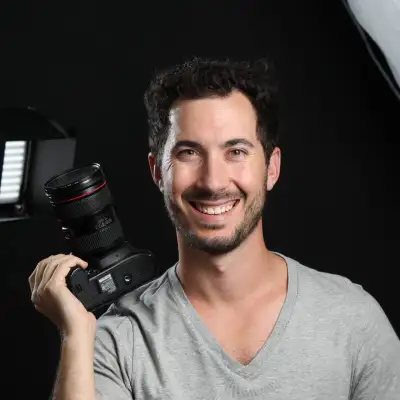
Welcome back to Built to Sell, Built to Buy. I'm your host, Sam Penny. Now today's guest sits right at the intersection of storytelling, strategy, and enterprise value. Jake Isham, he's a filmmaker turned brand strategist, who's helped founders, CEOs, and challenger brands turn what they know into authority people trust. His work has generated billions of views, but more importantly, it's helped businesses become memorable, credible, and scalable.
Jake believes storytelling isn't marketing garnish, it's infrastructure. If you've ever wondered why two businesses with similar products can have wildly different influence, pricing power, or even exit outcomes, this conversation will connect the docs. Jake Isham, welcome to the show.
Jake Isham (00:46)
Thank you, thank you for having me.
Sam Penny (00:48)
Now, Jake, I always love to start my conversations with not what you're working on right now and why you're this authority piece in storytelling, but going back to more of the origin, because obviously it's all about storytelling. So before the agency work, Jake, and the brand strategy, you're a filmmaker. Take us back to then.
Jake Isham (01:10)
So I grew up kind of a cliche LA kid ⁓ and I grew up wanting to be an actor and did a lot of theater and I kind of tried my hand in it hard and it didn't work out. And I was, you know, pretentious 16 year old at the time and I was like, well, I'll just write and direct my own movies so I can cast myself, which that's what just got me behind the camera.
⁓ And then while in film school, I completely forgot that I ever wanted to be an actor. ⁓ And I just felt completely head over heels in love with the craft of directing and writing and storytelling. ⁓ So that's kind of what got me into filmmaking as a director. And then in a similar way, post college, I, ⁓ you know, go, what am I doing? How do I make a
Sam Penny (02:07)
Hahaha!
Jake Isham (02:09)
because
you know, that's the one thing they don't teach you in film school is how do you actually make it living as a director. And so ⁓ I had a mentor of mine, who basically just was like, keep a camera in your hand, you know, take any job that keeps a camera in your hand. And I was growing my own social media at the time. This is kind of when social media was starting to become kind of like a thing. This was like the early early days of
influencers and this is and that's and I am
started growing and while I was growing my own social people were like, you're like a social media guy. was like, no, I'm a filmmaker. They're like, we'll pay you to shoot videos. ⁓ And so I was like, okay. And so I basically, know, that's kind of the the origin story of how it all kind of it was not like a definitive particular moment.
Sam Penny (03:08)
Fantastic. So storytelling, obviously the great Hollywood films are all based around a brilliant story and they're certainly not about being insta-perfect. So was there a moment where you realized that storytelling really wasn't about ⁓ creative expression but leverage?
Jake Isham (03:26)
trying to think if there was a specific time and I don't think there was a specific time, but.
I think as I've watched different mentors on YouTube and on social media, the entrepreneurs that we greatly admire, just, it kept getting reinforced of, you go to enough of these kind entrepreneurial conventions, you read enough entrepreneurial books and you go, they all have the same structure. They all share a story. Then the moral of their personal experience, every entrepreneurial book is the exact same.
Each chapter is a different Aesop fable, but of their life. I think just the culmination, because again, I didn't come from the business space. I came from the filmmaking space. So storytelling is something that I was doing as a kid. It wasn't like, whoa, storytelling. It was like, okay, storytelling, whatever. This is what I grew up doing.
⁓ And so, but I think it was just the culmination of multiple years, multiple books, multiple seminars, multiple, just the reinforcement of seeing every entrepreneur who was very successful had their stories. And so as I kept working with more entrepreneurs and brand owners, I was like, ⁓ that's really what works.
Sam Penny (04:59)
So you must have seen then two founders, for example, with really similar expertise, but with wildly different authority. And you must have thought to yourself, hey, there must be something else at play here.
Jake Isham (05:12)
Well, I'm gonna I'm gonna slightly alter your question, unfortunately, because I think there's, there's a point because I think people will have the element of storytelling, like you see a lot of entrepreneurs on social media talk about like, okay, this is how you make a million dollars, da da da. And a great example that I, I like is is more like, because Alex Hormozi came on the scene, and you could say really blew up in the last couple of years. Right?
Sam Penny (05:16)
That's okay.
Jake Isham (05:39)
and why he's done it so well. And one of the things he's talked about is like, you got to do it. And like you have to have walked the walk, you can't just say, this is how you make a million dollars, if you haven't made a million dollars, like you don't have the authority, and credibility to be able to say that, like you can, but it's not going to hit the audience the same way. And so like, I love talking about like, you know, the best heroes have slayed dragons. And if you haven't slayed dragons,
Go slay some dragons and then go talk about it. You know, it's one thing like if you look at all of the great Hollywood and just the stories that we love like from Lord of the Rings, Star Wars, Harry Potter, you know, take three of the biggest franchises. It's like they all had big villains that they had to overcome, which makes them great heroes.
Sam Penny (06:29)
So then looking
back, what has filmmaking really taught you about human behaviour, particularly when it comes to a business owner and what they completely miss?
Jake Isham (06:45)
you have to be the hero. And I was just ⁓ talking to someone I was mentoring yesterday. And I was like, look, you got to go do more epic shit. Like, you know, you like he was wanting to like we're doing a branding session. And we were going over the different elements that he wants to do. And I was like, because he wants to be a full time content creator. Like that's how he wants to make his living. It's like, great. Well, you have to live this ideal scene.
Sam Penny (06:56)
Yeah
Jake Isham (07:13)
that you want to be and then just video it. Like you want to be an ideal scene for men. That's what he wants the brand he wants to do and wants to build a business around that. It's like, well, then you got to live that ideal scene. But then the only simply the next step is just recorded and it might feel disingenuous. It might feel awkward. It might feel cringy, but like everything he wants is on the other side of that cringe. You just and so like you have to be that hero.
You have to have either lived that journey or document the journey. Either one works. And it doesn't mean you have to daily vlog by any means. But you could, for example, go, hey, this week I had 100 sales calls. This is what I learned. And then you just go through that, like that's documenting the journey. And ⁓ it's really looking at building those.
what are those dragons that you're facing? Because those are the stories that you're gonna be telling.
Sam Penny (08:17)
I love that, know, sort of walking the walk or being the man in the arena. Now, what do find that most founders misunderstand between authority and trust?
Jake Isham (08:22)
Mm-hmm.
think it's a way of communicating because authority and trust, you get authority when people trust you. So rather than going, okay, great, I need to bolster myself up and you know, like the strong guy in the gym is not flexing his muscles at you and walking around like, ⁓ what's up, right? That's not the strong guy in the gym. The strongest guy in the gym is much more humble.
who has that confidence in self. And I think self-confidence is such a... It's a hard thing to master, but at the same time, once it's mastered, it's so visible. In its smallness, it's so visible. And the easiest way is just there's a relaxedness when you're confident in yourself, and then that confidence comes...
cross as authority and that confidence then creates trust.
Sam Penny (09:30)
I want to now switch because I love that train of thought that you've got there of confidence and it's not necessarily ego. ⁓ What we're doing really is defining authority as an asset. So you've worked with founders and some of the some really world-class people and they're brilliant at what they do, but they're invisible. So why doesn't expertise automatically translate into authority?
Jake Isham (09:55)
Because it's two different skills. Running a business is very different than content creation. It's two very, very different skills. I'll give you a story about, for me, it's like I grew up on the stage acting. I performed in front of hundreds of people in theater, and I've also performed in front of thousands of people as a singer. And I remember post-college, early 20s, mid-20s, I was like, okay, I'm gonna start doing the...
the Gary Vee Grant Cardone thing and start making these videos and my god, I was in a parking lot trying to make this first video and I did probably 12 takes like and I was a trained actor and performer like I performed in front of 1000s upon 1000s of people for over for a decade plus and to just do a video in my phone, I had to do multiple multiple multiple takes and it's a different skill and it's just
Like, and one for one, all the clients I work with who are brand new content CEOs, I call them, is that within six months, they get so much better. Like the first times are typically pretty bad. And there's a lot of work. But by the sixth session that we shoot together, it's a quarter of the time, you know, a four hour shoot goes down to a one hour shoot. There's the editing that I have to do on them is so much more less like it's
And I constantly compare creating content like going to the gym. The only way to get better is you just have to do it.
Sam Penny (11:29)
Yeah, it's funny. It is hard. Yeah, that first time that you pick up a phone, put it on selfie mode and start to record yourself is really, you feel cringe. It feels really hard. And you even look, you mentioned Alex Hormosi, you go back to some of his really early ones, and also Stephen Bartlett from the diary of the CEO. And they were kind of a little bit cringe and you can see how awkward they were. It really is building up a muscle, isn't it? To be able to pick up that camera.
Jake Isham (11:40)
Mm-hmm.
Sam Penny (11:59)
and for it to flow naturally. Now, you've met a lot, yeah?
Jake Isham (12:02)
The best example of that, wanna
just throw this out for the audience. If you ever worried about being cringy, ⁓ go look at Post Malone's first music video. He's now in the top five streamed artists of all time on Spotify. Like if you ever wanna see a change of like, I can never be as bad as Post Malone's first music video. Like you will never be that bad. But he just kept with it. And now he's one of the biggest artists on the planet.
Sam Penny (12:13)
Yes.
Jake Isham (12:32)
Just know that, like it just comes down to the reps and doing it more.
Sam Penny (12:37)
It certainly does and with all business, it's all about consistency and turning it up every day. Now, you've met a lot of founders for the first time. Are there signals that really will tell you whether their expertise is always going to be trapped or is it transferable?
Jake Isham (12:53)
What do mean by that?
Sam Penny (12:53)
Well, do you see some founders who just have this expertise that you just go, I'm never going to be able to withdraw this from the person.
Jake Isham (13:02)
No, not particularly because if they're a successful founder, if they are, if they have an ability to help somebody and actually can help somebody, they can help somebody. And it's just great. We're just going to capture it on video, on audio, on in written form. Like it's not, if you can't actually get a product, then you can't then yes. But you know, the founder, like if you're a good founder,
and you can actually run a business and you can actually produce a product and get whatever you promise you can actually deliver, then yeah, you can definitely share it.
Sam Penny (13:39)
So then how do you help them really ⁓ bring out the story beneath the skill?
Jake Isham (13:44)
Well, it's actually trying to tell people it's much easier than they complicated a lot mentally. And I have found that it's usually the most obvious data. It's the data that they like, are like, really, this is what I'm sharing? Like, this is so obvious and stupid and silly and simple. And I go, yes. And that's what creates the trust is because you can solve their simple problems. They don't need the
the details, right? Like, an example I love giving is, you know, a contractor, right? If a contractor were to make content, right? He, he or she wouldn't need to go, okay, great. You're gonna put the two by four with this and that angle, and you need the exact this screw and that like, no, you go, hey, the first things that you need to do as a contractor is you need to survey the land to do like, I'm not a contractor. So I'm not gonna, you know, and like, I know what I'm talking about.
Sam Penny (14:39)
Hahaha
Jake Isham (14:42)
But like, for example, even for me, to be able to say, hey, it's the most obvious data that you need to start making videos on. know, as we, one of the things that you talked about that you do before we started was those 20 common frequently asked questions, right? that, it's like, look at your sales calls. What is on every, what is the question that constantly comes up in your sales calls?
that you're not answering correctly, like that you haven't pre answered. And if you can like pre answer any of these questions, these concerns, these objections in your content, that's what makes sales calls easier. It's what makes sales like any of your sales cycles or just your advertising, right? Like if you go, what are your key components in your copywriting? Just make videos on that, whether you're B2C, B2B, that's what the content that you need to focus on.
Sam Penny (15:36)
storytelling, it's a lot more than just content, it's all about strategy. And I always find that most founders think that storytelling is simply content. It's something to put on Facebook, YouTube, Instagram. But you really treat this like strategy. It's a really important part of the foundation of a business. When you make a founder recognize that, what shifts do you see changing in the company?
Jake Isham (16:02)
Well, I see their social actually grow. I see their marketing connect with their people. I see sales cycles go easier. I look at storytelling in kind of two perspectives when it comes to content, right? Is one, you have the actual storytelling, right? Here's my story, right? Or here's this story about how I slayed this dragon type of thing and how I learned this lesson.
But then you have the structure in which you communicate a message, right? It could be, and that structure is typically when it comes to video content and written content too is a hook. What is that first line, that first sentence, that first three seconds that gets the audience to go, hmm, what is this? And then the body and how you're structuring that and then how you end it. Like that even is just simple storytelling.
And it doesn't always have to be okay, here's a story. But here's the storytelling, the aspect of storytelling. And most of the reason why content doesn't succeed on the flip side of your question, which is because they don't actually have good structure. One for one, it's not great intros. One for one, like it's not a well structured video, the content is probably the body of it of like what the message is, is good.
but the way it's being delivered to the audience is...
Sam Penny (17:33)
Of all the companies that you've worked with, ⁓ you must see many that have a really clearly defined set of core values and they know what their brand pillars are. They know what their brand stands for. And then on the flip side, they've got the ones that are just more chaotic. They're just trying to sort of sell widgets, whatever it is. How do you see the content creation difference between those who really understand who they are as an organization with those clearly
define set of core values and those who don't.
Jake Isham (18:04)
That's a great question.
I personally find core values are much more of an internal thing than an external thing. your clients, because I work with a lot of B2B and not as much B2C, so I'll speak a little bit more on the B2B face, which is I see the core values turn up in how the team works and how the team operates. Not per se as much in the content.
⁓ of what they're sharing and how they're sharing it. it's, ⁓ so that's kind of, guess, my perspective on that question.
Sam Penny (18:49)
So you've spoken about digital shows and being omnipresent. Repetition, now how does repetition really lead into developing trust in a marketplace?
Jake Isham (19:02)
I mean, repetition is everything. is consistency and repetition, not only consistency in showing up and putting out more and more content, but the repetition of the message is that you feel like you might've said it once, twice, three, four, five, 10 times, but your audience has not actually duplicated. And there's constantly new people who are coming into your space. So like,
One of the things I always talk about my clients who are starting off at zero or a couple hundred followers or type of thing like that. It's like what you say now in month one of working with us and month six and month 12, you're gonna have more followers. They've not seen the videos that you made six months ago. Much less people don't know what you posted a week ago. The great question I love to, and I'll pose it to you.
Do you remember what you scrolled on Instagram an hour ago or TikTok or YouTube or Facebook? Do you remember any of the posts you saw?
Sam Penny (20:06)
Yes, I do. It was all about building wooden boats last night. That's what my feed started to fill with, because I want to build a wooden sailboat. I've never done it before. I started, you know, I found one video and of course that then teaches the algorithm that this guy is into building wooden boats.
Jake Isham (20:15)
Amazing. Yeah.
And you see how fast that your algorithm changed though. And that's part of it. It's like people's interests right now, your algorithms are so interest based. So you might have somebody watching your stuff organically cause it's resetting it. And then they get onto, they like one other video. They share one other video to a friend. Now their fee is completely different and you're off their feed forever. So that's where the repetition in message and the consistently showing up is so, so important.
Sam Penny (20:33)
⁓ absolutely.
So there's obviously then a great cost of being inconsistent with the Founderled brand.
Jake Isham (21:04)
Mm-hmm.
Sam Penny (21:05)
Do you find working with founders, particularly founder led brands, where the founder does not want to be ⁓ the face of the brand? You must see it all the time.
Jake Isham (21:17)
Yeah, that's usually once they've kind of gone over that hump of like, okay, I have to do this. That's when they call me. Because the joke is, you it's like, they don't, you know, you don't need a me, you don't need an agency like myself, you don't need a video team. Like you have a 4k, you know, camera in your phone. Like we all like it's not that complicated to do this anymore.
Sam Penny (21:25)
Hahaha
Jake Isham (21:44)
I have $100 light that's lighting me you have an open like if you standing by an open window, like it's what you hire somebody is to help you with accountability. If what to say what how to say it what to do with your hands, you know, like all of those like where to stand where should we shoot this video like it's all of those minor details that you're like, I can't I don't want to think about this right now or I don't know what to think about this. And
you know, I love comparing social media to the gym. You know, I've been on an interesting journey for myself is like, I'm very inconsistent with the gym, I will lose 30 pounds, and then be like, great, I'm done. And then I'll gain 40 pounds back. And then I'll go to the gym and lose 20 pounds. And so I've done this multiple times over my adult life. And this year, I'm kind of like, okay, let me actually I've done some, you know, spiritual and mental, you know,
healing and changing and then I'm like, okay, I can actually just stick with this consistently now. And that's what content is. It's better to show up and do one post once a week, then 10 posts this week and zero posts for the next three months. In the same way going to the gym, like, it's about the repetitions, it's about the consistency. So like, I always recommend like start with something that you can handle. If that's posting twice a week on one platform, great.
do that for a month and then go great, can I post four times? You know, like I have a kind of a system that I've built out with different guests with different like kind of as a low level entryway, which is just basically like a seven day calendar. And, you know, you go ideas one day, prep the next day, shoot the next day, edit the first half of stuff on the next day, edit the second half of stuff on the next day.
You use a scheduler, distribute the next day, and then analytics the last day. And then you repeat that. It's an hour a day for seven days, and you have posts going out every single day.
Sam Penny (23:55)
You mentioned earlier about equipment and ⁓ many businesses when they get into this content creation feel that they need to go out and spend a heap on great equipment. we have an amazing camera in our pocket in our phones. ⁓ And it's really all about then, isn't it? Just turning up, shooting that video. Because if you get the story right, the content right, that's going to override great cinematography every time.
Jake Isham (24:27)
100%, great content is great content. You don't need good gear. What I do recommend though, is you need to upgrade your gear over time. It doesn't need to be day one. Like do a year with just your phone and then go, great, now I'm gonna spend, you now that the content is actually making me money and expanding my business, you're gonna improve on that. Like it, but.
What I recommend is like the two things to, to, if you're going to buy anything, don't buy a camera first, keep the phone, buy a light and buy a good microphone. You can get great little lavaliers, which are the wireless microphones for a hundred us dollars. ⁓ a light again, a good light and a stand for again, about a hundred us dollars. And I like that will help continuously improve your content and
Like what you need to do is upgrade over time. Like I'll give you a quick story on that is like I have a friend who is a full-time content creator and she I've worked with her on and off over the years and Her her stats she blew up and is now over the last kind of two years have tapered off and I tried to get her to upgrade her gear and she just she can't and won't and I guarantee that's part of the reason why her content has not
continue to grow at the numbers that it used to grow is because she's now at the point and she has several hundred thousand subscribers. And so this is the point, like she's got several hundred thousand subscribers and this is when she needs to upgrade the gear. Great, let's get better cameras, let's get better lighting, let's get a better set. Like put some things around to help because this is her living is she's a full time content creator. ⁓
upgrade it the same way like if you're a race car driver and you learn on a small shitty car and then as you get better you need a better car but that's over time win some matches first
Sam Penny (26:39)
Love that. ⁓ Now, going back to getting the founder in front of the camera, often you'll see a business, they'll try and get the pretty person to do some content. But really that person who is always gonna have the longevity in the business is gonna be the founder. How do you see ⁓ getting the founder in front of the camera as that key main person?
to effectively reduce that key person risk.
Jake Isham (27:09)
I mean, I'm a big, big proponent of personal brands. So whether you're officially being like making a business account or not, like.
you look at take politics aside, you look at Elon Musk, you know, and what he's been able to do, because he built a personal brand. And you starting to see like, Mark Zuckerberg do the same thing on social you're seeing ⁓ from blanking on his name, but the CEO of Instagram, Sam Altman, Brian Johnson, like you see these founders who are in
in alignment with their company, but focusing on their personal brand. And that for me is like, I would rather you build a personal brand than being the face of your company. Because I think that's a much more successful, it allows you to continue to, if you sell the company, you can then continue to push whatever element that you want to push as a founder. And I find those much more
successful and relatable because you're talking about you. And obviously what you're pushing, like, for example, I'm pushing my agency. But I'm just talking about marketing, and talking about filmmaking, which is what I love. If I were to just talk about my agency, I wouldn't be talking about any of my film stuff. Because that's not what my agency does. My agency works with personal work works with entrepreneurs building their personal brands. And so
I found that to be whether you're in B2C or B2B, there's slightly two different brands that need to be pushed at the same time. But the founder led brands focusing it via their personal brand is a very successful action.
Sam Penny (29:01)
You mentioned Sam Altman from OpenAI and many founders feel nervous about getting in front of a camera. I don't know if you've ever watched any of the OpenAI lives on YouTube where they'll have Sam Altman and three or four of the engineers sitting around having a chat about the latest product release. It is the most awkward looking group and Sam Altman is not what you call a great guy in front of the camera, but people tune in, people lean in because he has built this
place of trust and authority. And to any listener out there who's worried about getting on camera and feeling awkward, watch Sam Altman, you feel a lot better. ⁓
Jake Isham (29:42)
Yep.
Sam Penny (29:44)
now let's talk about identity and confidence and really playing the long game here. Now, what's the internal resistance you see when most founders step into that visibility?
Jake Isham (29:56)
think it's the kind of mental demons, the devil on the shoulder that goes, you look like an idiot on that video. And just the kind of all that mental angst that all of us can get self-reflective about. It's very funny whenever I film women, each woman has a body part that they don't like about themselves.
whether it's their legs, had a client was like, make sure my bangs are right. Like that was the thing that she kind of like you could say hyper fixated on was her bangs, that she just had a lot of attention. Others like my stomach, my this, my that like, us we as audiences don't see that. We don't. And ⁓ it was very, I'll give it, here's a crass blunt answer and story about
this exact topic. ⁓ One of my parents friends started making content. And I'm really good friends with her daughter. And they started making content. And I was told ⁓ by this woman that ⁓ she's like, God, I feel like I look so old. And her daughter then responds, Mom, you are old.
I was like, look, like, like you are the way you are you you have the wrinkles you have you have the scars you have like that is you. So what? Like, do what you can do to make yourself look but like that is that is you like, okay, whatever. ⁓ Like, is that gonna are you gonna let that stop you from achieving your goals? And I like to just
Sam Penny (31:23)
Hmm.
Jake Isham (31:49)
you know, the best thing I can do is just kind of consistently reinsure the person and, and validate them. It's like, look, people don't care the same way. Like, and I try to go like, look, do you care that that person's this or that or that? Like, no, okay. I mean, two great examples to again, go back to the filmmaking standpoint, and the storytelling standpoint is look at Joaquin Phoenix and Forrest Whitaker. Both have, you can say facial issues, and facial deformities that are not ideal. They're not the pretty boy, and have had
unbelievable careers that any actor would literally die for and cut off a limb for because but and that's talent and they have an ability to communicate. So as long as you have an ability to communicate and an ability to actually help somebody else, another human being, you're going to do great. Now, all you have to do is just get better by just doing it more.
Sam Penny (32:42)
when you start filming with a founder, you must see it all the time where as soon as that camera starts rolling, they start performing. How do you stop them from performing and getting them to actually show up and be more open, honest, personable?
Jake Isham (32:57)
To be honest, just practice. There's some training that I've done, and I work at it as a director. Like, hey, let's say that line again. Say it like this, or say it like that. And you could say a little bit of my value add. But in terms of if you're not working with me, if you're living in Australia, and I'm not flying out to work with you one on one.
The easiest way is just you just got to practice. Alex Tremose talks about it. He's like, you guys didn't see the five years I put in doing five coaching calls a day for five years. That's why I can communicate. There are communication courses that I can recommend if you want to message me. I'm more than happy to send you a link. But it just comes down to practice and the more you do it. I've noticed
My wife's an actress and but she wasn't an actress before she met me. And it was only a couple of years into our relationship where she was like, okay, Jake, I actually want to be an actress. I'm like, great, let's do it. And she's like, no, no, no, no, And she comes from a dancing background. And so she was, you know, a little more used to the stage rather than specifically on camera. And it's been very fun to just watch her get more comfortable in front of a camera.
The easiest way to, again, and the best way to be comfortable in front of a camera is to put a camera in front of your face. Now you could record 100 videos and never put them out. Great, now I recommend putting them out, but you can do that. You can go great, but if you're just doing the reps and there's no way around doing the hard work.
Sam Penny (34:48)
So talking about visibility then, you've come from wanting to be an actor, you've been a performer on stage, to now where you're really working with founders to create visibility, but also your own personal brand, your own personal visibility. Has your relationship with visibility changed over time?
Jake Isham (35:10)
Ooh, ⁓ that's a deep question.
Sam Penny (35:12)
I'm not gonna let you get off the hook with easy ones.
Jake Isham (35:18)
Yeah, that's a... ⁓
Something I don't talk about much is the life I grew up with. My parents are in the entertainment industry. ⁓ so I've been around a lot of highly visible individuals. And so it's definitely been an interesting thing for me because I grew up limelight adjacent.
and
So.
This is I don't know why this question hits me hits me more. Because it's interesting. It's like, you know, I think at the end of the day, it's like, if it's coming from the right place. I mean, look, you have these other you have a lot of people who are coming from just the aspect of wanting to entertain and wanting just to be celebrities and get attention and be interesting. And I think as a as a youth, that was that was definitely my intention was like, I just wanted to be
famous and I wanted to be popular and make money and you be a billionaire and you know all that jazz but not understanding what comes with it and as I've gotten older I think the goals are still similar in terms of the reach and but what I but the intention behind it is different where the the goal is to help as many people is to not just be famous for famous sake and even in the
as an artist is to create projects and artistic, you know.
projects that inspire people and entertain people and uplift them, not just to be famous for famous sake having, you you're looking at a handful of the people on social media. And it's interesting because
I've had multiple videos that have gone multiple millions of views, tens of millions of views. And if you're doing it to chase numbers, it gets really sour. Because if your whole validation is just views, it gets really sour. Because once those views started going away, and I was like, my god, and it's a lot of mental stress, rather than my goal is to just
either entertain people, inspire people, educate people, help grow my business. And if you're doing it from there and you know, okay, great, as long as I'm inspiring one person, great. And so that's kind of been the shift for me.
Sam Penny (38:02)
really appreciate the openness and honesty there, Jake, because it's those, when you're able to draw out the emotional side in a founder, ⁓ it resonates so much more with the audience, doesn't it?
Jake Isham (38:15)
Yeah. And that's where it's, I go back to kind of how we started this conversation, which was slaying those dragons. You know, those dragons are the vulnerable moments are the like, to slay a dragon, you have to almost be defeated. The dragon will almost have to kill you. so the willingness and ability to just be vulnerable and communicate like, hey, I almost lost here, or I did lose and I came back. Right? Like,
Those are the moments that make it real for people. It's no okay, great. Yeah, this, this sucked. But like, you don't have to share, you don't have to share the story while it sucks. You can share the story about when you did win. And like, but like, understand like, what is the element that sucked? Because that suck is usually what the people that you're trying to communicate to are going through. Because you're usually telling them the solution to
how it sucked for you.
Sam Penny (39:18)
Jake, we're coming towards the end of the conversation. I've absolutely been enthralled by this conversation. It's been brilliant. I want to shift this over to some practical things that a founder, a listener can employ into their own business and building their own personal brand. If you could leave founders with one idea about storytelling and authority, what would that be?
Jake Isham (39:42)
focus on from you could say kind of circle back to what we talked about in the middle of this, which was for storytelling, focus on structure when you're creating content and ⁓ worry so much about that first hook, that first sentence, that first three seconds, that's so, so, so, so important. Like spend more time in prep and figuring that out than in post-production. Nothing you can do in post-production will save a bad hook.
So that's the first thing in terms of authority. Authority comes through slaying great dragons and having your own epic stories to tell. the real because it comes from relatability where you know authority comes from you know, hey, I the bigger dragon you slayed the more credibility you will have and
the more credibility you have, the more ability and the ability to just communicate to your audience relaxedly about that. Because the confidence that you have in having the journey that you've done.
Sam Penny (40:50)
So on your journey over the years, Jake, is there a belief about branding that you've really changed your mind on?
Jake Isham (40:57)
Branding is everything. Branding and a personal brand changes. The only thing that I think founders should be going after is a personal brand. Yes, you have your company, but like a healthy body where you got to just show up, go to the gym, you got to eat healthy. And if you take too long off of it, you're... Am I allowed to curse on this or not? I know you Australians curse, but I'm just checking.
Sam Penny (41:22)
Absolutely.
Jake Isham (41:27)
You know, like, if you take a couple months off the gym, you're fucked. It's the same thing with a personal brand, like you just have to show up consistently, even if it's less, even if it's not as good. Even if the hooks are not as good, it is more important for you, in my opinion, to put out consistently than good. Because good will come over time, you'll naturally go, I got to think with this hook, I got to think with this hook, like that comes naturally over time. Now you can train to do it also, but like you just naturally get better at
like going, I naturally know how many calories are in this chicken breast. And how much proteins and like, you just, you just do it enough, you know, like, I know, I shouldn't eat ice cream today. Okay. Or like, yeah, I've had enough protein today. I can have my ice cream today. That's fine. So that's that those are kind of the biggest things I would I wouldn't part
Sam Penny (42:20)
on that idea then of consistency, what is more dangerous then? No story or the wrong story?
Jake Isham (42:28)
no story or the wrong story.
Give me a little bit more context to this question, if you don't mind.
Sam Penny (42:32)
Yeah, certainly. So ⁓ what's more dangerous? Just trying to force a piece of content for the sake of content or just not turning it up at all.
Jake Isham (42:46)
not turning up at all. Like it is so much better. Because part of that I've seen again to go back to this gym reference like it's about working the muscle. You work the muscle. And I'll give one last story on how important consistency is and just quantity is. I work with this nonprofit and they have chapters all over the world and they recently started really going heavy on social media.
And one of the chapter heads that I work with, who's a close friend of mine, I was telling them because they have an internal game amongst the chapters of who can get the most views who can grow the most of their own chapter social media. And I was talking to this chapter head, I was like, you want to know how to win. And she was like, Yeah, it's like, just post three times more. Like, literally, if you just post three times more than the rest of the chapters, you will win because you're having three more opportunities.
to go viral, you're having three more opportunities to reach more people, you're having three more opportunities to find a video that works and and a style that works. And now once you find a viral video, once you find a style that works, double down on that, because you know what works. But that's and that's the most important thing is just like
you need to experiment more and different styles, different things and social media landscape changes so quickly about what is the right thing. So to experiment more and to practice more and to put it out more is always, always gonna help you more.
Sam Penny (44:22)
Jake, you've worked with some amazing founders over the time, and I am sure of very different personalities. What is it that makes a founder unforgettable?
Jake Isham (44:35)
I mean, I think it depends on it's, I'm just going through all the different founders that's.
think what makes a founder unforgettable is their ability to communicate that they understand their audience's pain and their ability to, even though they've gone through their journey, that they understand the low moments and their ability to communicate, hey, I was here and this is how I kind of figured this out because usually us as founders start a business because we went through a pain.
And we went through some suffering and we were like, ⁓ I want to, you know, I had to figure it out. And now I want to help others go through the same thing.
or that you've helped enough people and you went, ⁓ I can actually help more people doing this and your ability to communicate that and be relatable for as long as possible is I think one of the most valuable things.
Sam Penny (45:36)
Jake, this has been a really powerful conversation. What really stands out is the way you've reframed storytelling. It's not as content, it's not as marketing, but it really is a key piece of infrastructure of any business. Because when a founder can clearly articulate who they are, what they stand for and why their perspective matters, everything downstream becomes easier.
Trust forms faster, sales conversions shorten, teams align, and ultimately businesses become more valuable and more transferable. This is the part of business building that really shows up in a data room. It absolutely shows up in deal outcomes. Now, for anyone listening who knows they have real expertise but hasn't found the right way to express it, I think this episode will have shifted how you see that problem entirely. Now,
Jake, before we wrap up, I'd love to hand it over to you. Where can people follow your work, connect with you, learn more about you, about what you're building, but also to get in touch.
Jake Isham (46:35)
LinkedIn is great. LinkedIn, Instagram, ⁓ those are two fantastic places to find me. ⁓
Yeah, easy as that Jake Isham on all channels, you might find ⁓ my filmmaking, my photography. So that is me also, don't worry. But ⁓ the marketing stuff, the agency stuff, ⁓ know, keep it. ⁓ LinkedIn is a great place for that all.
Sam Penny (47:06)
Yeah, brilliant. And I'll make sure I'll share all those links into the show notes. And thanks again, Jake, for your time and the depth you brought to this conversation. And to everyone listening, if this episode sparked something for you, the question to sit with is simple. What do you know that the market still hasn't fully heard from you yet? Thanks for joining us on Built To Sell, Built To Buy. I'm Sam Penny. We'll see you next time.